Glare is a common cause of complaints in offices, hospitals, schools, and commercial spaces. Even when brightness levels are sufficient, poor glare control can reduce visual comfort and fail UGR requirements. This guide covers anti-glare lighting, UGR evaluation, and luminaire selection for comfortable and compliant projects.
glare while maintaining sufficient illumination.
Unlike conventional luminaires that expose bright LEDs directly to occupants, anti glare fixtures use optical technologies such as recessed optics, reflectors, louvers, and lens systems to improve visual comfort.
Common anti glare solutions include:
For example, professional anti-glare downlights with deep recessed optics can achieve extremely low glare values while maintaining precise beam control. GS LIGHT Anti-Glare Downlights The DF Series features a triple anti-glare optical design and can achieve UGR ≤16 for demanding commercial applications.
Glare occurs when bright light sources create excessive luminance contrast within your field of view.
Common causes include:
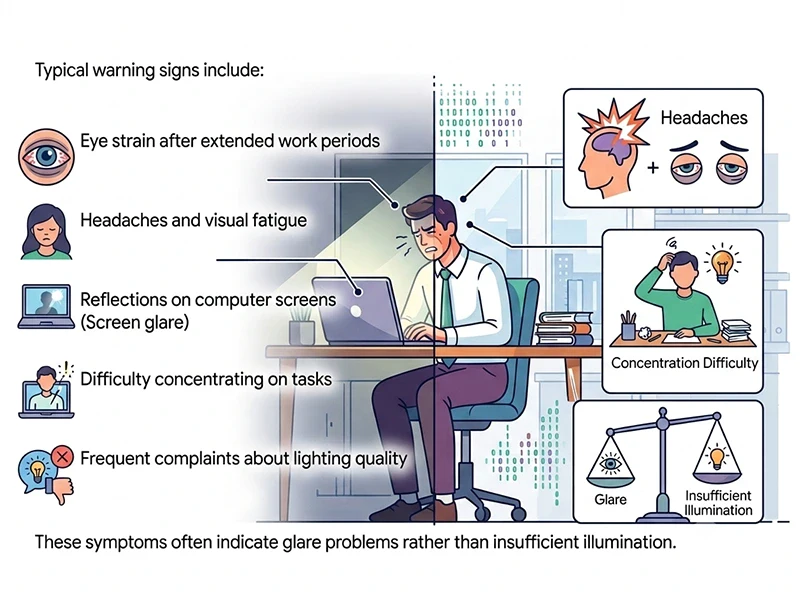
Glare is especially noticeable in offices, classrooms, healthcare facilities, and other spaces where people spend long periods performing visual tasks.
Poor glare control can lead to:
Even when lighting levels meet design requirements, users often perceive a space as uncomfortable when glare is not properly controlled.
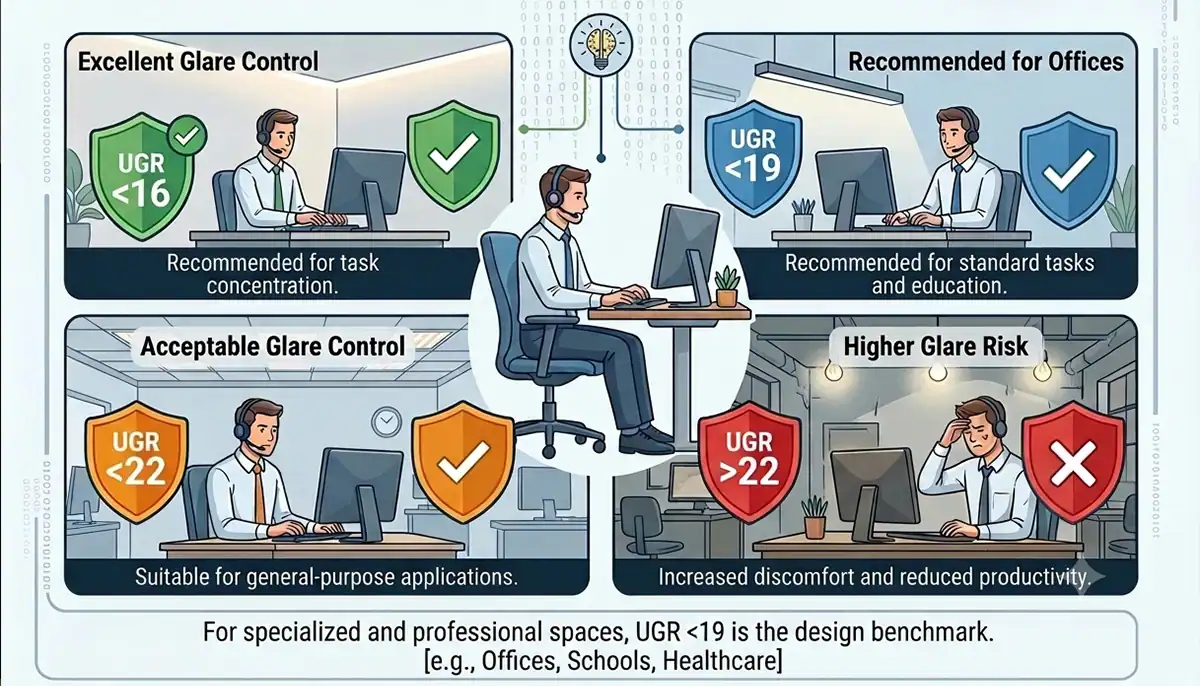
UGR (Unified Glare Rating) is the most widely used method for evaluating discomfort glare in indoor environments.
A lower UGR value generally indicates better glare control.
| UGR Value | Performance |
| <16 | Excellent |
| <19 | Recommended for offices |
| <22 | Acceptable for general applications |
| >22 | Increased risk of discomfort |
For most offices, schools, and healthcare facilities, UGR <19 is considered the preferred design target.
| Application | Recommended UGR |
| Offices | <19 |
| Meeting Rooms | <19 |
| Schools | <19 |
| Hospitals | <19 |
| Libraries | <19 |
| Retail Stores | <22 |
| Corridors | <25 |
Before specifying a luminaire, always review verified UGR reports and photometric data.
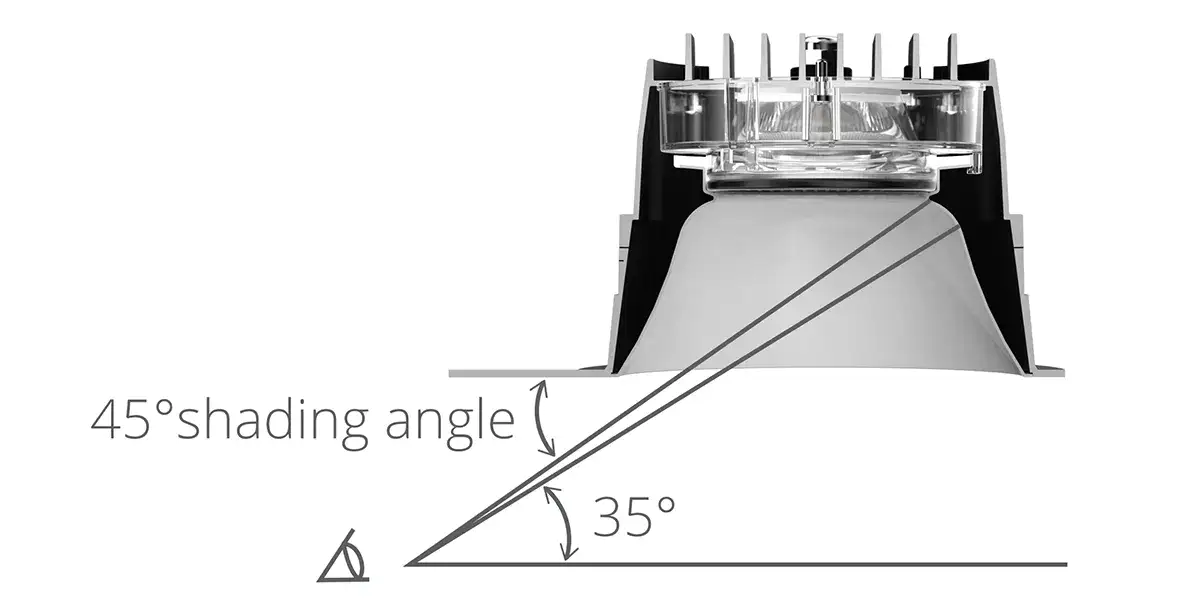
Modern anti glare luminaires use optical technologies to reduce direct brightness while maintaining illumination quality.
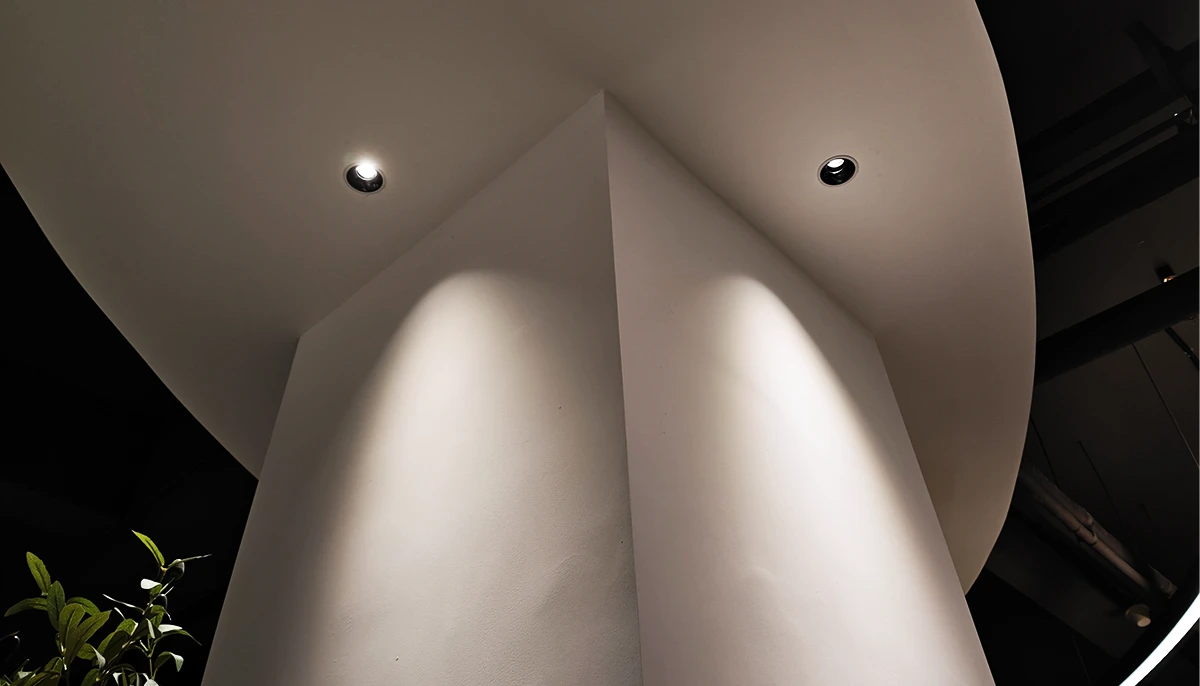
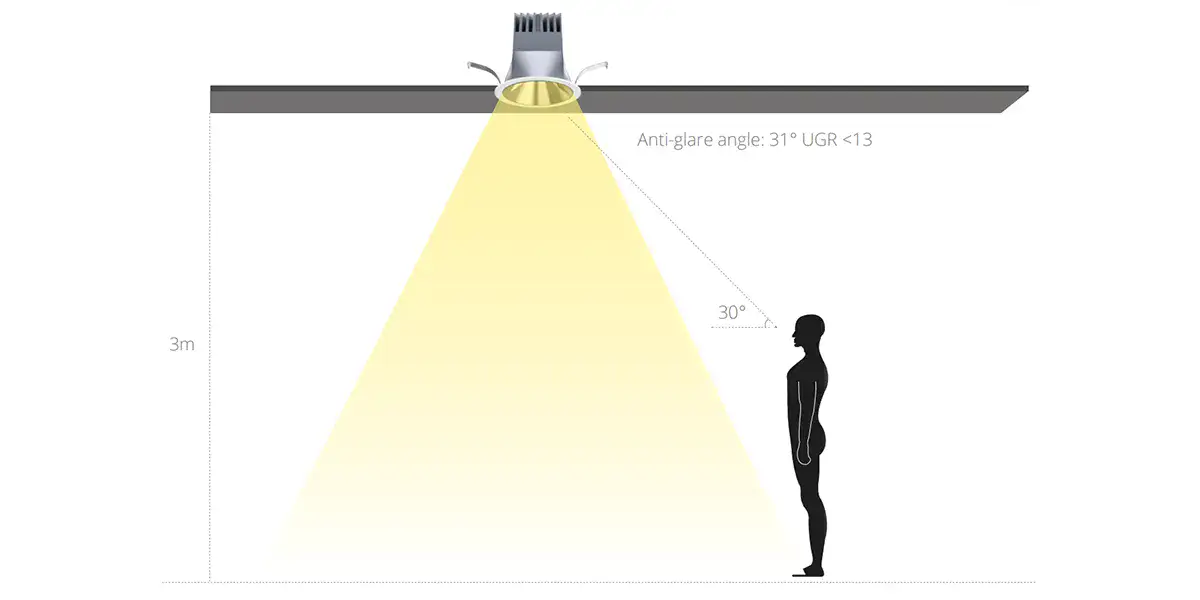
Deep recessed structures position the light source farther away from direct view, reducing discomfort glare and improving visual comfort.
Many modern anti glare downlights use recessed optical chambers combined with reflector systems to achieve low UGR performance.
Recommended Solution:
The DF Series uses a triple-reflector anti-glare design and supports multiple optical accessories, making it suitable for offices, hotels, retail spaces, and architectural projects.
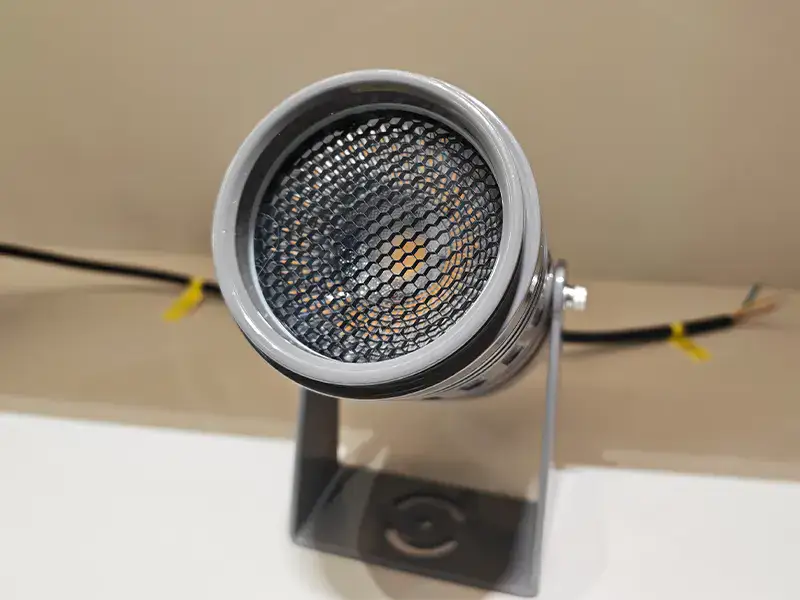
Honeycomb louvers block high-angle light and reduce direct visibility of bright LEDs.
Micro-prismatic diffusers help distribute light evenly and reduce brightness hotspots.
This technology is commonly used in anti glare LED panel lights for offices, schools, and healthcare facilities.
Recommended Solution:
GS LIGHT panel lights incorporate anti-glare optical designs, with some models achieving UGR<13 while maintaining high efficiency and flicker-free performance.
Advanced lens systems improve light distribution and reduce excessive brightness.
They help create uniform illumination while maintaining visual comfort.
Adjustable anti glare luminaires allow precise aiming while controlling glare.
They are widely used in:
Common beam angles include:
Choosing anti glare lighting involves more than selecting the lowest UGR value.
You should evaluate both fixture performance and project conditions.
When selecting downlights, consider:
Deep recessed anti glare downlights are typically preferred for offices, hospitality projects, and premium commercial spaces.
When selecting panel lights, look for:
For office and educational environments, Edge-Lit LED Panel Lights provide uniform illumination and UGR<19 performance, helping improve visual comfort during prolonged work or study.
Before specifying a luminaire, request:
These documents help you evaluate actual performance rather than relying solely on marketing claims.
A fixture that performs well in a 3-meter office may not achieve the same results in a space with a higher ceiling.
Always evaluate installation conditions when reviewing glare performance.
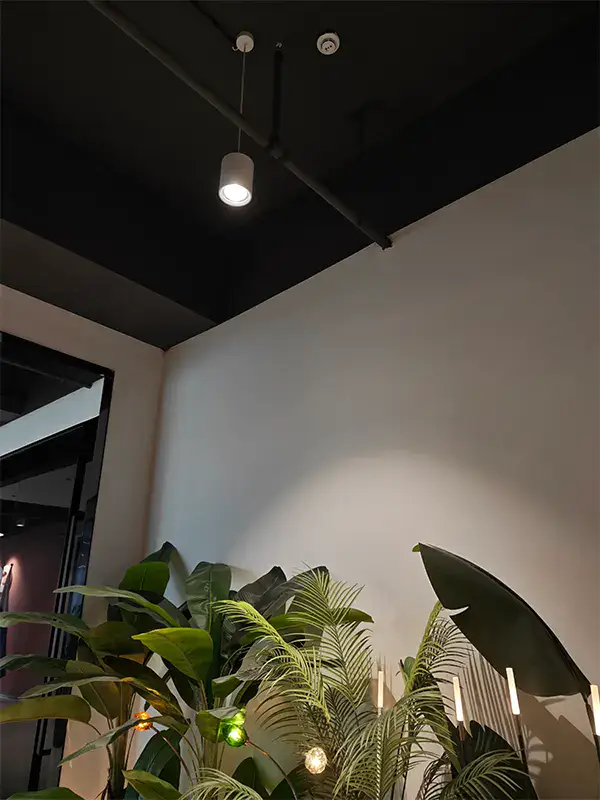
Occupants experience lighting from different positions throughout the day.
The same luminaire may appear comfortable from one angle but uncomfortable from another.
This is why lighting simulations and photometric analysis are critical during project design.
Higher wattage does not automatically mean better lighting performance.
Optical design often has a greater impact on visual comfort than power consumption alone.
Many projects focus on lumen output while overlooking glare performance.
Always verify UGR data before specifying a product.
The cheapest luminaire can become the most expensive option if it leads to complaints, replacement costs, or project revisions.
Without photometric data, it becomes difficult to accurately predict fixture performance.
Ceiling height, viewing angles, workstation layout, and reflective surfaces all influence glare perception.
Recommended:
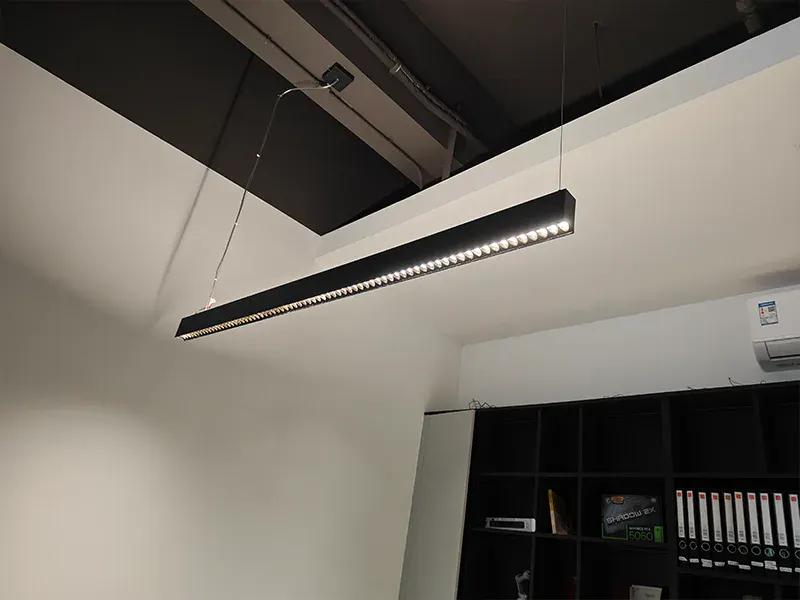
For open-plan offices, combining panel lights with anti-glare linear lighting often provides the best balance between illumination and visual comfort.
Recommended Products:
GS LIGHT linear lighting systems support multiple anti-glare optical accessories, including grille, honeycomb, and prismatic anti-glare options for office applications.
Recommended:
Focus on:
Recommended:
Target:
Recommended:
Focus on:

Anti glare lighting is essential for creating comfortable, compliant, and visually appealing environments. By understanding UGR, selecting the right optical technology, and evaluating real project conditions, you can reduce complaints, improve occupant satisfaction, and achieve better lighting performance for your project.
Glare is commonly caused by exposed light sources, excessive luminance contrast, reflective surfaces, poor fixture placement, and insufficient optical control.
For offices, schools, hospitals, and other task-oriented environments, UGR <19 is generally considered the recommended standard.
UGR 19 is typically recommended for offices and environments requiring high visual comfort, while UGR 22 may be acceptable for less visually demanding spaces.
They use deep recessed optics, black reflectors, honeycomb louvers, and precision lens systems to reduce direct visibility of the light source.
Yes. Reduced visual discomfort helps occupants maintain focus, minimizes eye fatigue, and improves overall satisfaction with the environment.
No. Ceiling height, workstation layouts, beam angles, room dimensions, and surface reflectance also influence perceived glare performance.
Initial costs may be slightly higher, but they often reduce complaints, replacement costs, and long-term maintenance expenses.
At a minimum, request UGR reports, IES files, beam angle information, CRI data, flicker reports, thermal testing results, and warranty documentation.
Yes. Adjustable anti-glare luminaires with precise beam control and high color rendering are commonly used in museums, galleries, and exhibition spaces.