GS Light logo

Warehouse Lighting

LED warehouse lighting built for safety, productivity, and lower energy bills. Whether you manage a distribution center, manufacturing plant, or cold storage facility, the right high bay lights reduce operating costs and improve working conditions.
warehouse (1)

Maintenance Free

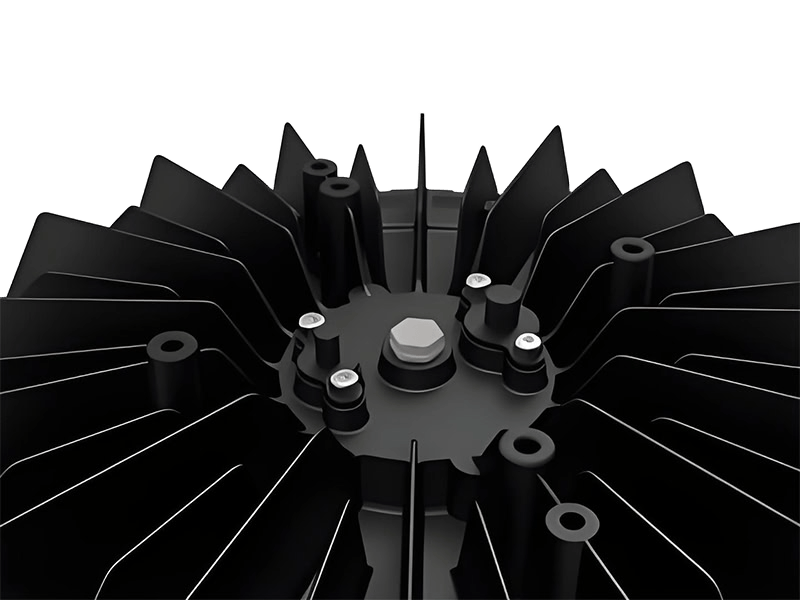
LED warehouse lights last 50,000 hours or more, with premium fixtures reaching 100,000 hours. That's 5 to 10 years of daily use without replacing a single bulb. For facility managers with maintenance contracts, this means fewer service calls and lower labor costs. Traditional lighting options like HID and fluorescent lamps fail after 10,000 to 20,000 hours, requiring regular replacements that add up fast in large industrial spaces.
High-Bay-LED-Lamp-Screw-in-breather-nut (1)

Environment Friendly

Switching to LED high bay lights cuts energy consumption by 50% to 75% compared to HID or fluorescent fixtures. A typical warehouse running 250 traditional 400W metal halide lamps could drop to 150W LED equivalents, saving over 150,000 kWh per year. That's real energy efficiency with a measurable impact on both utility bills and carbon footprint. LEDs also contain no mercury, unlike fluorescent tubes that require special disposal.
high-bay-2

Intelligent Control

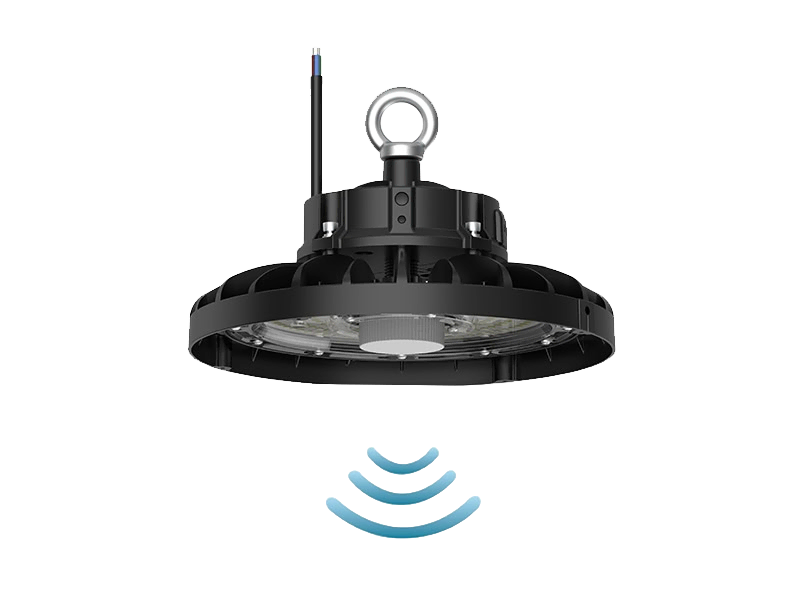
UFO LED high bay lights, linear LED high bays, and tri-proof lights all support 0-10V and DALI dimmable options. Microwave motion sensors detect activity and dim lights in unoccupied zones, cutting energy use by another 30% to 50%. Emergency battery packs (1.5 to 3 hours backup) are available for safety compliance. These lighting systems work together to match illumination levels to actual warehouse activity throughout the day.
industrial-high-bay-light-sensors

Return On Investment

Most LED warehouse lighting upgrades pay for themselves in 12 to 24 months through lower electricity and maintenance costs. Facilities with high operating hours or access to utility rebates often see ROI within 6 to 12 months. A 100,000 square foot facility switching from 400W HID to 150W LED high bays typically saves $10,000 to $20,000 annually on energy alone, depending on operating hours and local electricity rates. DLC-listed fixtures often qualify for utility rebates that can offset 20% to 50% of the purchase cost, depending on your local utility program.
ufo-led-high-bay-aluminum-reflector

Select the Proper Warehouse Lighting System

Three main lighting technologies work in warehouse and industrial facilities: HID lamps, fluorescent tubes, and LEDs. Your choice depends on ceiling height, temperature conditions, and how much control you need over light output. Here's how each option performs in real warehouse environments.

High Intensity Discharge (HID) Lamps

HID lamps generate light by passing electrical current between two electrodes inside a gas-filled bulb. The gas type determines the lamp characteristics. Sodium vapor produces orange-yellow light. Metal halide creates brighter, whiter output. Mercury vapor sits somewhere in between. These were the standard for industrial lighting before LED technology matured.

Pros

Lower upfront cost than LED light fixtures.
More energy-efficient than older halogen lamps.
Proven technology with decades of use in large spaces.

Cons

Strong glare that causes eye strain and headaches during long shifts.
High energy consumption, typically 40% to 60% more than equivalent LED wattage.
5 to 15 minute warm-up time before reaching full brightness.
Limited color temperature options, usually only 3000K or 4000K.
Poor compatibility with dimmers and motion sensors.
10,000 to 20,000 hour lifespan requires frequent bulb replacements in high ceilings.

Fluorescent Lighting

Fluorescent lamps work by sending current through mercury vapor. This excites electrons that emit ultraviolet light, which then hits a phosphor coating inside the tube and creates visible light. T8 and T5 tubes have been common in commercial and industrial settings for warehouse aisle lighting and front office areas.

Pros

More energy-efficient than HID lamps, using about 30% less power.
Wider color temperature range from 2700K to 6500K, including popular 5000K daylight options.
Lower heat output than HID, reducing cooling costs in temperature-controlled spaces.

Cons

Flickering and humming that affects worker focus and productivity.
Poor performance in cold storage (below 50°F) and hot environments (above 100°F).
Limited dimming capability, only down to about 30% output.
Lifespan drops significantly with frequent on/off switching.
Contains mercury, requiring professional disposal and creating liability concerns.
10,000 to 20,000 hour lifespan, shorter than LED alternatives.
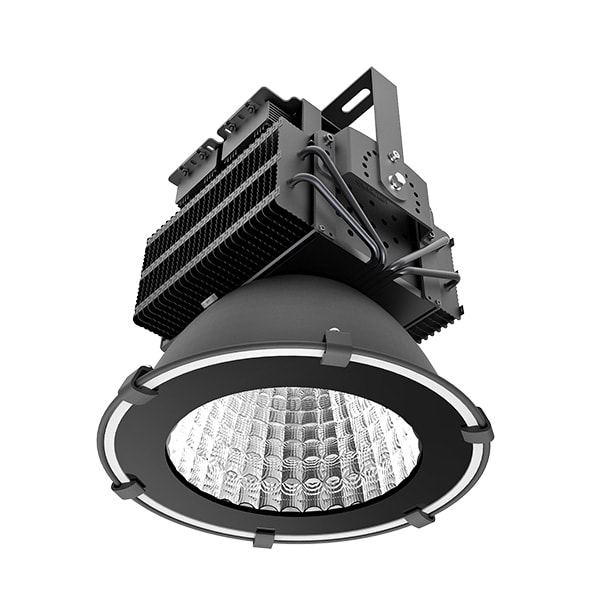
500W HIGH BAY LIGHT

LED Lighting

LED (light-emitting diode) technology creates light by exciting semiconductors. When electrical current passes through the diode, it releases photons directly as visible light. This process is far more efficient than heating a filament or exciting gas, which is why LEDs dominate modern commercial lighting and industrial lighting applications.

Pros

Most energy-efficient lighting solution available, delivering 130 to 200 lumens per watt.
Reduces energy consumption by 50% to 75% compared to HID or fluorescent.
50,000 hour lifespan or more eliminates most replacement costs.
Works seamlessly with dimmers, motion sensors, and daylight harvesting controls.
Instant on/off with no warm-up time needed.
Performs reliably in temperatures from -40°F to 130°F, ideal for cold storage.
Full spectrum light at various color temperatures (3000K, 4000K, 5000K) improves color accuracy for picking and inspection.
Selectable CCT models let you adjust color temperature after installation.
No flicker, no hum, no mercury.
Multiple fixture designs fit high ceilings, low ceilings, narrow aisles, and open floor plans.

Cons

Higher upfront cost than HID or fluorescent, though ROI typically occurs within 12 to 24 months.

Types of Warehouse
Lighting Fixtures

LED lights provide the best combination of energy savings, lifespan, and light quality for warehouse applications. But not all LED fixtures work equally well in every space. UFO high bay lights and linear high bay lights each serve different lighting needs. Choosing the right fixture depends on your ceiling height, rack layout, and the tasks workers perform below.
100W-150W-200W-UFO-LED-HIGH-BAY-LIGHT- (1)

UFO High Bay LED Light

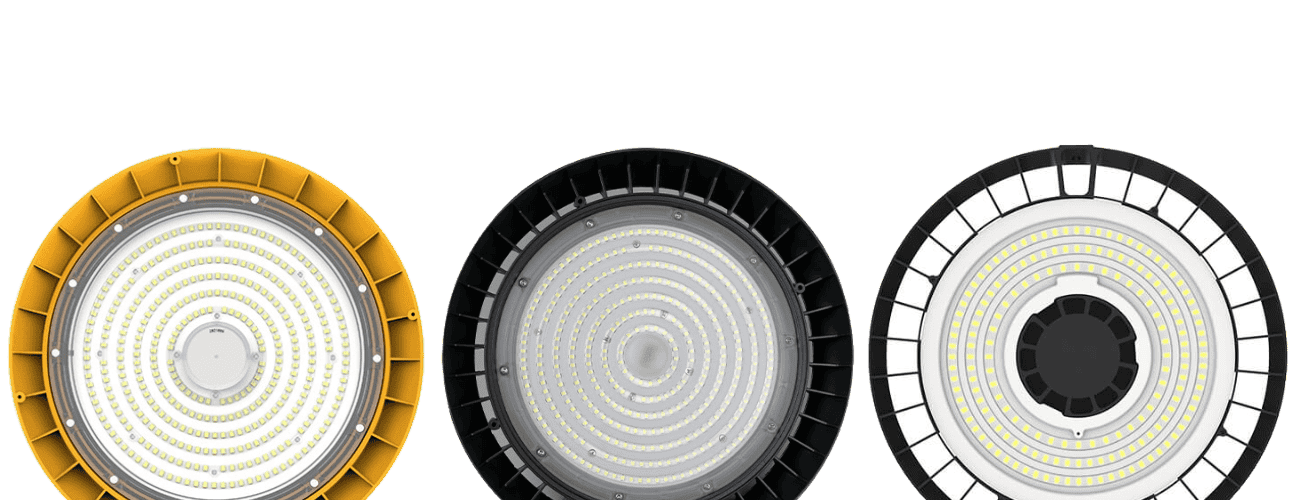
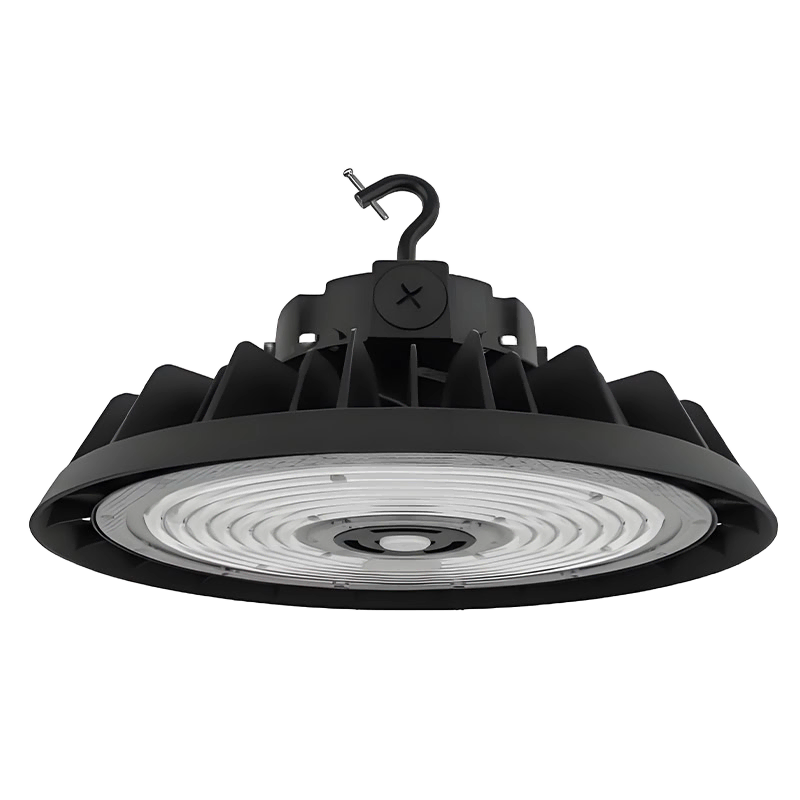
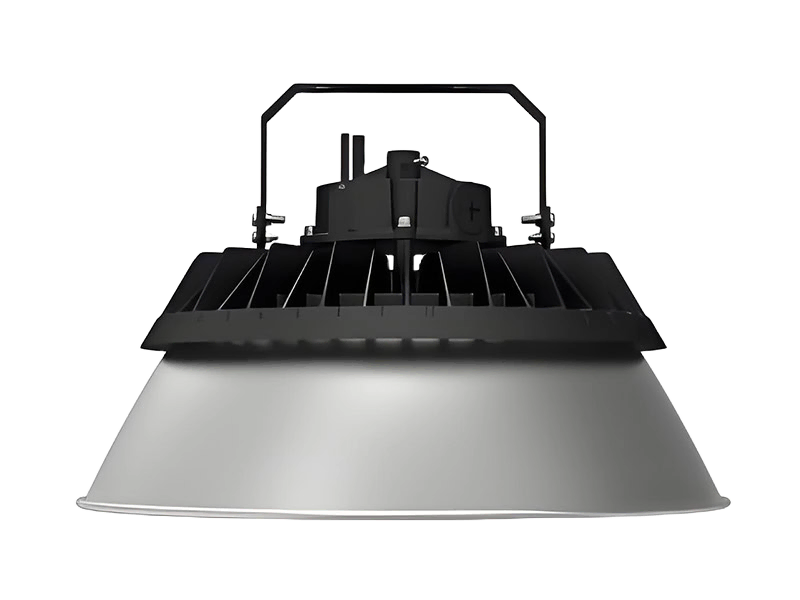
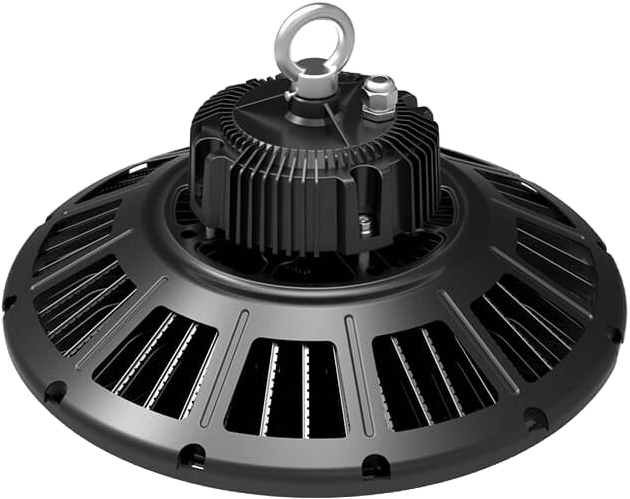
UFO LED high bay lights get their name from the round, disc-shaped housing. These compact fixtures pack serious lumen output into a small footprint, making them popular warehouse lighting for open storage areas and general illumination. Most models offer selectable wattage (100W, 150W, 200W) and beam angles (60°, 90°, 120°) so you can match output to your specific space.

Pros

Quick installation with multiple mounting options including hook, chain, and pendant.
High efficiency at 130 to 200 lumens per watt, reducing fixture count.
IP65 rating available for damp locations and outdoor loading docks.
Lower cost per lumen than linear alternatives.
Compact size fits between sprinkler heads and other ceiling obstructions.
5 year warranty standard on quality fixtures.

Cons

Concentrated light pattern may create uneven coverage in narrow aisles.
Single-point light source can cast shadows around tall racking.
Adobe Express – file (28) (1)

Linear High Bay LED Light

Linear high bay LED lights spread illumination across a longer surface area, making them the right choice for warehouse aisles, high-stacked racking zones, and areas where even light distribution matters most. The elongated shape fills gaps between shelving units and reduces shadows that cause picking errors.

Pros

Even light distribution across narrow aisles and between tall racks.
High efficiency at 120 to 160 lumens per watt.
IP65 options for outdoor and wash-down areas.
Glare-free design improves visual comfort during long shifts.
120-277V input standard, with 347-480V options available.
Better coverage pattern for rectangular spaces and production lines.

Cons

Fewer beam angle options due to the fixture design.
Slightly lower efficiency than UFO models of equal wattage.
More complex mounting, especially when retrofitting existing troffer or fluorescent layouts.

Features and Benefits of
Warehouse Lighting

battery-eco

Energy Saving and Cost Saving

LED warehouse lighting fixtures deliver the same or better illumination as HID lamps while using 50% to 75% less electricity. A 150W LED high bay produces equivalent light to a 400W metal halide, saving 250 watts per fixture. Multiply that across 100 fixtures running 12 hours daily, and you're looking at $8,000 to $15,000 in annual energy savings, depending on your local electricity rates. Maintenance costs drop too since LED bulbs last 5 to 10 times longer than traditional lighting options.
timeline-event-text

Improve Production Efficiency

Proper lighting levels directly affect worker productivity and safety. Bright, even illumination at 300 to 500 lux helps employees read labels accurately, spot obstacles quickly, and maintain focus during long shifts. According to an International Labour Organization study, improved factory lighting resulted in a 10% increase in productivity and a 30% reduction in errors. Better visibility also reduces accidents from forklift collisions and trip hazards. Fewer injuries mean fewer worker absences and lower insurance claims.
vector-bezier-2

Reduce Error Rates

Good warehouse lighting helps workers see clearly and make fewer mistakes. LED high bay lights eliminate the harsh shadows and dim spots that cause misread labels, wrong picks, and damaged inventory. Full-spectrum LEDs at 5000K color temperature reveal true colors, making it easier to distinguish between similar products. In shipping and receiving areas, better illumination speeds up inspections and catches damage before products leave the dock. The result: fewer returns, fewer chargebacks, and happier customers.

Warehouse Lighting FAQs

Most frequent questions and answers

Divide your floor area in square feet by the coverage area per fixture. A 150W UFO high bay typically covers 400 to 600 square feet at 20 to 25 foot mounting height. A 50,000 square foot warehouse needs roughly 85 to 125 fixtures to reach 300 lux at floor level.

High bay lights mount at 15 to 45 feet and use narrow beam angles to project light downward over long distances. Low bay lights mount below 15 feet and use wider beam angles for shorter throw distances. Ceiling height determines which fixture type delivers proper illumination at floor level.

Choose 60° beam angles for ceilings above 30 feet or narrow aisle lighting between tall racks. Choose 90° for general warehouse spaces with 20 to 30 foot ceilings. Choose 120° for ceilings below 20 feet or areas needing wide, overlapping coverage. Narrower angles concentrate light; wider angles spread it.

Look for DLC listing to qualify for utility rebates in the US and Canada. UL or ETL listing confirms electrical safety for code compliance. IP65 rating indicates dust and water resistance for wash down areas. CE and RoHS certifications verify environmental and safety standards for international projects.

Yes. Most LED high bays accept 100 to 277V input and wire directly to existing circuits after removing or bypassing the old ballast. Hook and chain mounts fit standard junction boxes. Retrofitting typically takes 15 to 30 minutes per fixture and requires no new wiring in most installations.

Ready to Start Your Lighting Project?
From architectural lighting solutions to OEM/ODM customization, GS LIGHT helps global partners create reliable LED lighting solutions.
Copyright 2026 GS LIGHT. All Rights Reserved.
Privacy Policy
Terms & Conditions
Sitemap

Send Your Inquiry

gslight-wechat-qr