
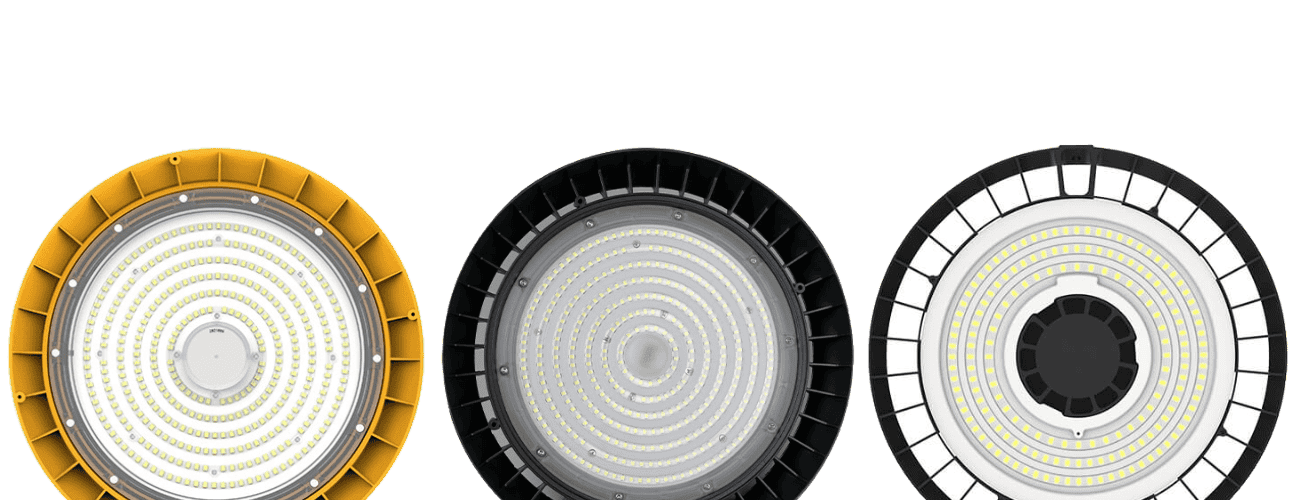
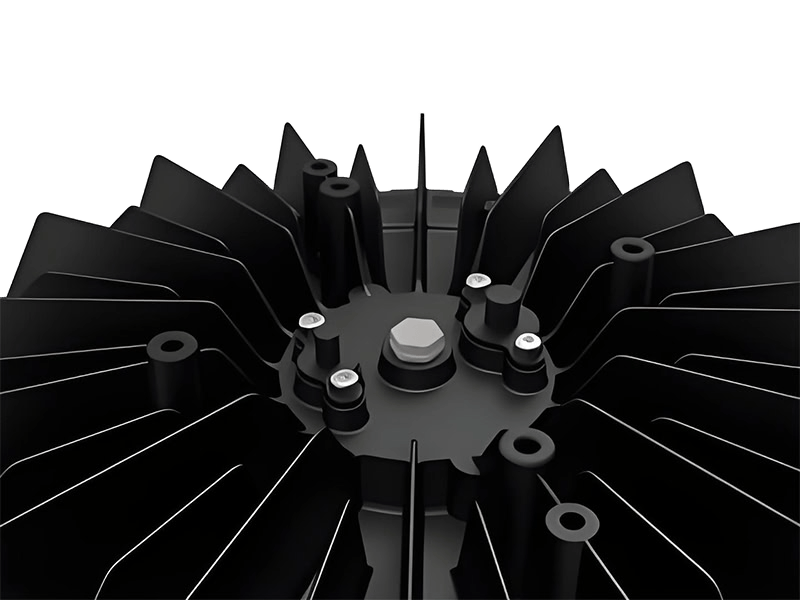
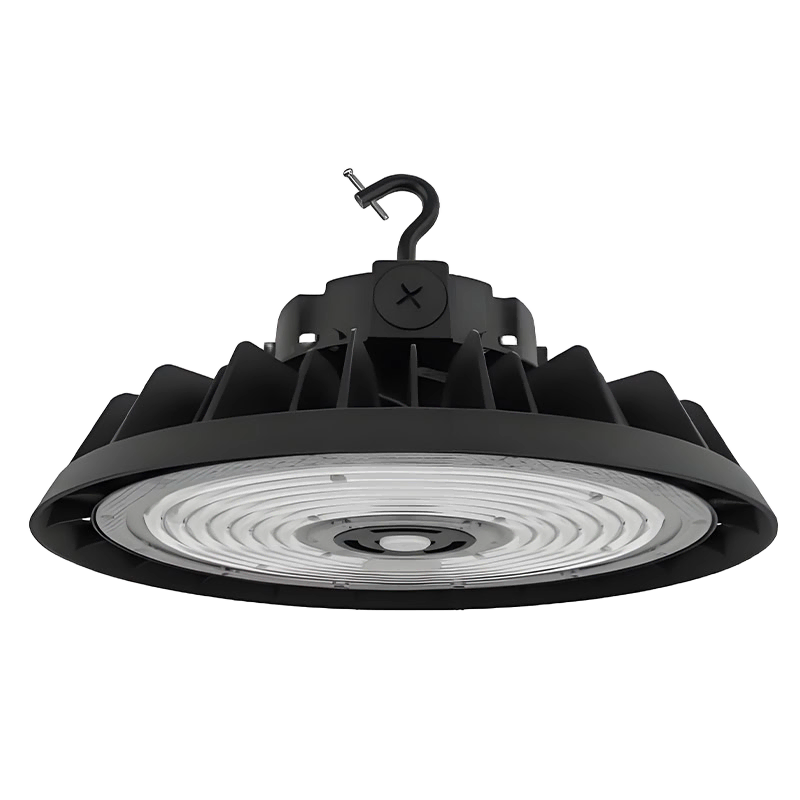
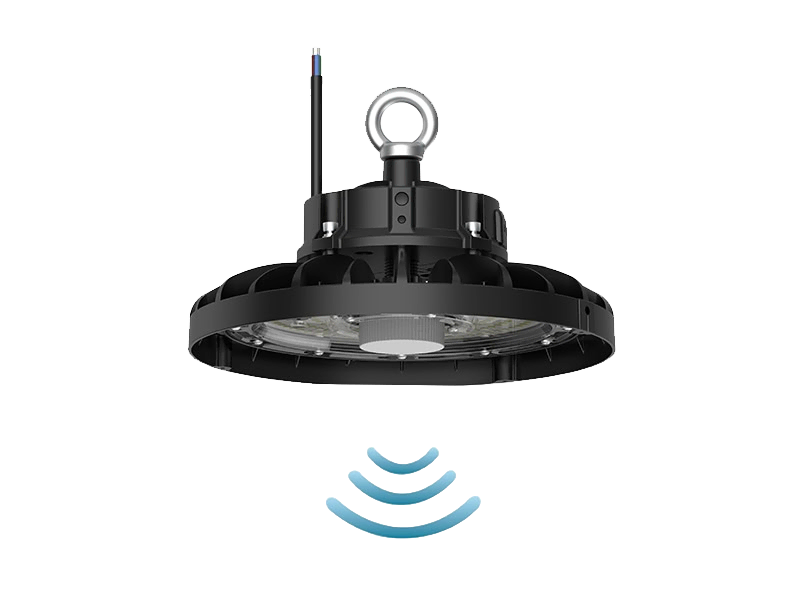
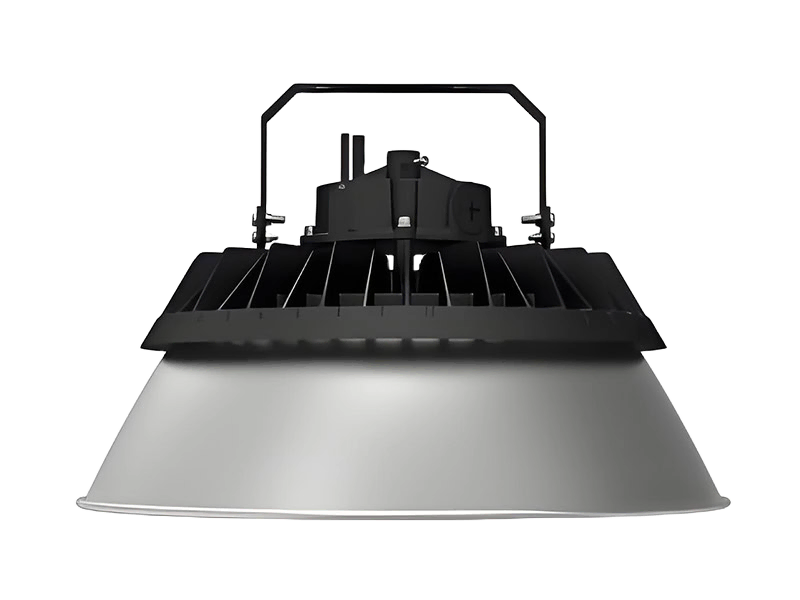
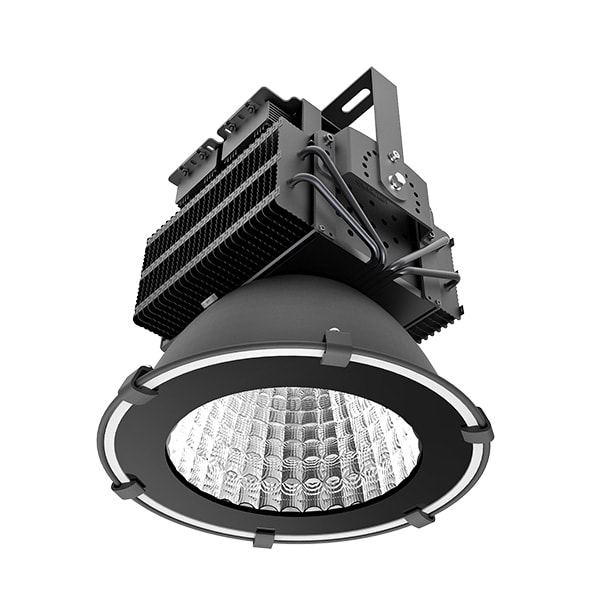
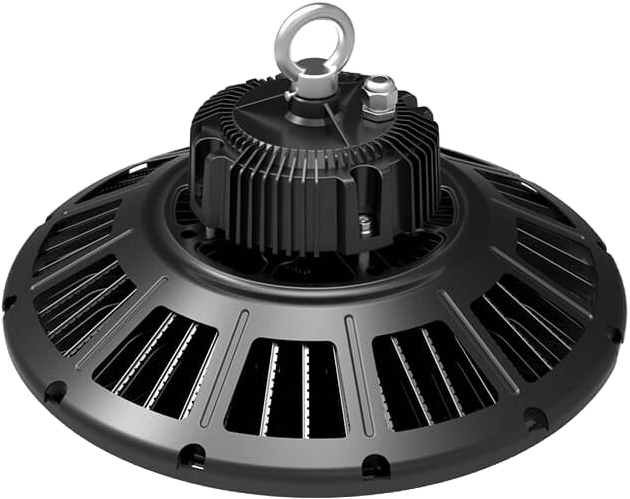


LED high bay lighting is the best choice for most warehouses. It uses 50% to 75% less energy than HID or fluorescent lamps, reaches full brightness instantly and works with motion sensors. Pick UFO high bays for open floor areas, linear high bays for rack aisles, and sealed tri proof fixtures for docks and low ceilings.
Plan for 150 to 300 lux at floor level, roughly 14 to 28 lumens reaching each square foot. Multiply the target lux by the floor area in square meters, then divide by about 0.6 to allow for light lost to racks, walls and dust. A 50,000 square foot warehouse lit to 300 lux needs about 2.3 million lumens, or 85 to 125 fixtures at 150W.
OSHA sets a minimum of 5 foot candles, about 54 lux, for indoor warehouses, corridors and exits. That figure comes from the illumination table in 29 CFR 1926.56, written for construction sites, and it is a safety floor. Working warehouses need far more light: about 10 to 30 foot candles (100 to 300 lux) for storage, picking and packing.
Often, yes, but the existing installation needs checking first. Most LED high bays hang from the same hooks and wire to the same circuits once the old ballast is removed or bypassed, and hook and chain mounts fit standard junction boxes.
Before reusing anything, check the hook or suspension load, the junction box condition, the protective earth, cable size and condition, breaker capacity, input voltage and any dimming or sensor wiring. On a large retrofit, check driver inrush current and circuit grouping as well, because startup current affects breaker selection and how many fixtures can sit on one circuit.
Ask for the documents the destination market requires, for the exact model on your quote. For European projects, confirm the applicable CE conformity documentation. For projects in the United States and Canada, check UL or ETL listing and DLC requirements for that model where they apply.
GS LIGHT high bays carry CE certificates by product line and TUV CB test reports, and are built in ISO 9001:2015 certified factories. Certification varies by configuration, so request the certificate for the model quoted rather than for the range.


