You’re specifying lighting for a warehouse, parking structure, or manufacturing facility. Should you use commercial or industrial fixtures?
You need to answer this question because the cost of mismatching both lighting types is substantial. Commercial fixtures in industrial settings produce insufficient illumination and trigger compliance violations, including OSHA fines up to $70,000.
Industrial fixtures in commercial applications waste capital on unnecessary capacity and drive higher energy costs over the system’s 10-15-year lifespan.
To help you avoid this costly mistake, among others, this guide details the technical, regulatory, and financial differences between these systems. This way, you can specify appropriately for your facility requirements.
Here’s how these systems stack up side by side:
| Feature | Commercial | Industrial |
|---|---|---|
| Purpose | Visual appearance, brand presentation | Safety, operational continuity |
| Applications | Offices, hotels, retail complexes | Warehouses, factories, logistics yards |
| Light Output | 2,000-8,000 lumens | 10,000-30,000+ lumens |
| IP Rating | IP65 | IP66-IP67 |
| Lifespan | 5-7 years | 10-15 years |
Commercial fittings are selected for visual impact and ambience. Industrial fixtures are specified for resilience, lumen stability, and compliance with safety standards.
Commercial lighting emphasizes aesthetics and branding with lower output (2,000-8,000 lumens). Industrial prioritizes safety and durability with higher output (10,000-30,000+ lumens) and longer lifespan. Let’s go into detail below.

The purpose of the property largely dictates fixture design, light output, and installation choices. Take these case-to-case examples:
According to the National Safety Council, proper lighting can reduce workplace injuries by up to 40%. Those extra foot-candles make a greater impact between an unnoticed hazard and a safe, outdoor space, which helps employees go home safely each day.
Build quality follows function. Commercial fixtures use materials suited to moderate outdoor exposure, while industrial construction must withstand dust, moisture, temperature swings, and mechanical impact.
Here are the differences that directly affect lifespan and maintenance cost:
Commercial Light Fixtures:
Industrial Light Fixtures:
For environments demanding maximum durability, these LED outdoor bulkhead lights are manufactured with IP65-IP67 ratings that provide complete protection against dust ingress and water jets.
These fixtures withstand extreme temperatures from -40°F to 140°F, making them ideal for industrial applications where equipment failure isn’t an option.

Great, your fixture can take a beating. Now, does it produce enough light?
Durability is table stakes. The specs that separate a good fixture from the wrong fixture are lumen output, control integration, and foot-candle targets.
These three numbers, along with the standards set by the Illuminating Engineering Society for each, tell you whether you’re lighting for aesthetics or to prevent someone from tripping over a hydraulic line at 2 a.m.
Lumen Output:
Control Systems:
Foot-Candle Standards:
Beyond brightness, quality matters. High-quality lights feature CRI (Color Rendering Index) above 80 and L70 ratings, which indicate how long the fixture maintains 70% of its original brightness.
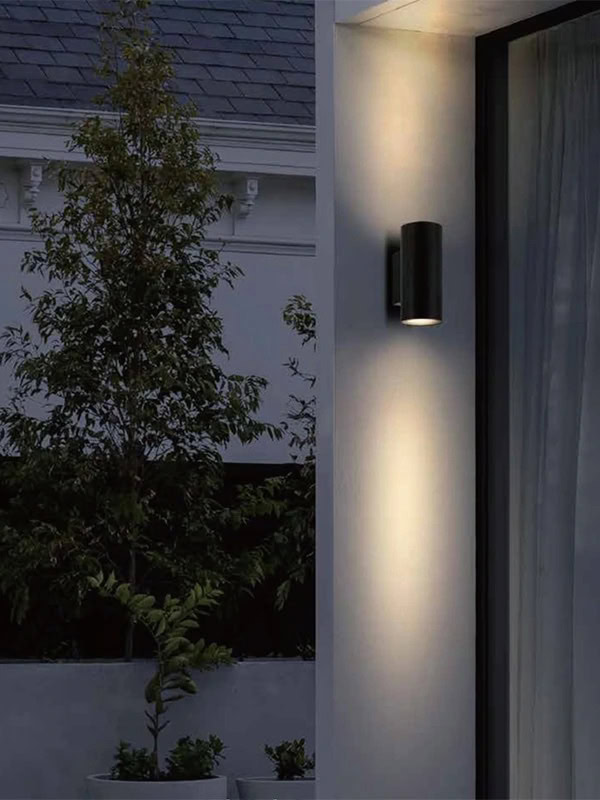
A CRI above 80 ensures colors appear natural and realistic, which is necessary for safety signage and quality inspection. We recommend using these LED wall lights and outdoor spotlights to enhance your architectural features while meeting IP65 standards.
You can nail every technical spec and still fail an OSHA audit if your fixtures don’t meet regulatory minimums.
Compliance requirements differ sharply between industrial and commercial sites, and the gap between a passed inspection and a $70,000 citation often comes down to documented foot-candle measurements and emergency backup systems.
Key Regulatory Bodies:
Industrial facilities face stricter requirements. OSHA mandates specific foot-candles and emergency lighting. OSHA non-compliance can result in penalties ranging from thousands to over $150,000 for willful violations, depending on severity.
On the other hand, commercial properties have more flexibility but must meet local parking lot codes. Most municipalities require 1-5 foot-candles to reduce liability from slip-and-fall incidents.
Have large outdoor areas that require powerful illumination? Use LED flood lights that deliver 10,000-30,000+ lumens and are IP66 waterproof-rated, perfect for parking structures and loading docks.
Durability specs and compliance ratings have cost implications. Long story short: commercial systems install cheaper but cycle faster, while industrial systems cost more upfront but spread that investment over twice the service life.
To compare accurately, here are the key points for model installation, energy, and replacement across the full operating period:
Installation Costs:
Industrial costs more upfront due to heavy-duty fixtures and specialized mounting. However, that 10-15 year lifespan means half the replacements.
Energy Consumption:
Simple ROI Example:
Lighting 10,000 square feet over 10 years with commercial fixtures costs $80,000 initially at $8 per square foot. They need one replacement at year 5, totaling $160,000. Industrial costs $150,000 initially at $15 per square foot with no replacement required.
Industrial saves $10,000 despite higher energy use. That doesn’t count maintenance labor costs, which heavily favor industrial.
Disclaimer: This example focuses on installation and replacement costs. Factor energy consumption separately based on your operating hours and local electricity rates.
A structured specification prevents downtime, extends service life, and supports energy targets over the system’s lifespan.

Use the following steps to match your fixture’s performance to its purpose, environment, and maintenance plan.
Divide your site into functional zones based on required illuminance (lx) rather than appearance. This makes your design measurable and repeatable.
| Zone Type | Typical Use | Target Illuminance (lx) |
| High-intensity | Docks, inspection bays, machine areas | ≥ 500 lx |
| Medium | Parking areas, internal roads | 200-300 lx |
| Low-Intensity | Walkways, landscaping, perimeter zones | 50-100 lx |
Use a photometric plan (IES or CIE standard) to confirm that each area meets its required lux level. If you operate night shifts, check uniformity ratios (max:avg < 3:1) to avoid glare or dark spots.
Note: 1 foot-candle ≈ 10.76 lux
Select fixtures rated for their actual exposure conditions. Each rating is measurable and verified by IEC standards.
Note: For harsh industrial environments such as warehouses and factories, consider LED tri-proof lights with waterproof, dustproof, and corrosion-resistant construction.
Face extreme washdown conditions? Opt for IP69K-rated lights for the ultimate defense against high-pressure, high-temperature water jets. This ensures your safety, hygiene, and uninterrupted operation.

The more fixture types and driver models you use, the harder it is to maintain your system. Every variation increases the number of spares you need to stock, complicates wiring, and slows down repairs.
Here’s what to do:
If you operate a site with 100 or more fixtures, this system typically reduces maintenance hours by 30-40% over 5 years. Fewer fixture types mean fewer failure points and faster repairs.
Need durable lighting for your warehouse or industrial facility? Explore our comprehensive warehouse lighting guide and LED high bay lights collection engineered for high-ceiling applications.
Before approving any lighting order, confirm that the performance data is independently tested and traceable. Request proper laboratory reports that show how each fixture performs under real conditions.
Here are the industry-standard test methods to verify your fixture performance:
This verification ensures that every installed luminaire meets the required specification to protect your project from downtime and rework.
Yes. Certain fixtures are specifically designed to work in both environments. Tri-proof LED lights, for example, offer waterproof, dustproof, and impact-resistant construction with IP65-IP67 and IK08+ protection levels. These versatile fixtures handle everything from retail parking lots to industrial loading bays.
Commercial properties emphasize aesthetics with lower light levels (1-30 foot-candles) and warm color temperatures (3000K-4000K) designed to attract customers. Industrial facilities prioritize safety with higher levels (20-100 foot-candles) and cooler temperatures (4000K-5000K) for maximum visibility and productivity.
Choose 3000K-4000K for commercial spaces like restaurants and hotels to create warm, inviting environments. Choose 4000K-5000K for industrial facilities like warehouses and factories. Research from the Lighting Research Center shows that 5000K LED technology can boost worker productivity by up to 15%.
Commercial spaces benefit from lighting solutions emphasizing ambiance and branding to create customer experiences. For outdoor pathways and architectural accents, LED inground lights provide elegant illumination with IP67 waterproof ratings.
Industrial facilities require lighting solutions focused on safety-critical illumination and durability standards to protect workers and maintain operations. UFO high bay lights deliver bright, even illumination, ideal for warehouses, gymnasiums, and manufacturing facilities.
You now have the technical specs to select the appropriate lighting system for your facility. If you’re running retail, hospitality, or office buildings, commercial fixtures at $5-12 per square foot create the ambiance that supports customer experience and brand presentation. These systems provide 5-7 years of service with moderate maintenance.
Choose industrial if you’re lighting warehouses, factories, or facilities where inadequate lighting could lead to injuries. Those fixtures last 15 years and keep your insurance premiums stable, rather than watching them spike after preventable incidents.
Specs on paper are one thing. Fixtures that deliver those specs over a decade are another. GS Light LED supplies tested and certified lighting systems built with components from Philips, Osram, and Samsung. Fill out this form today to get in touch with our team to design a compliant, cost-efficient lighting system that meets your site requirements.