


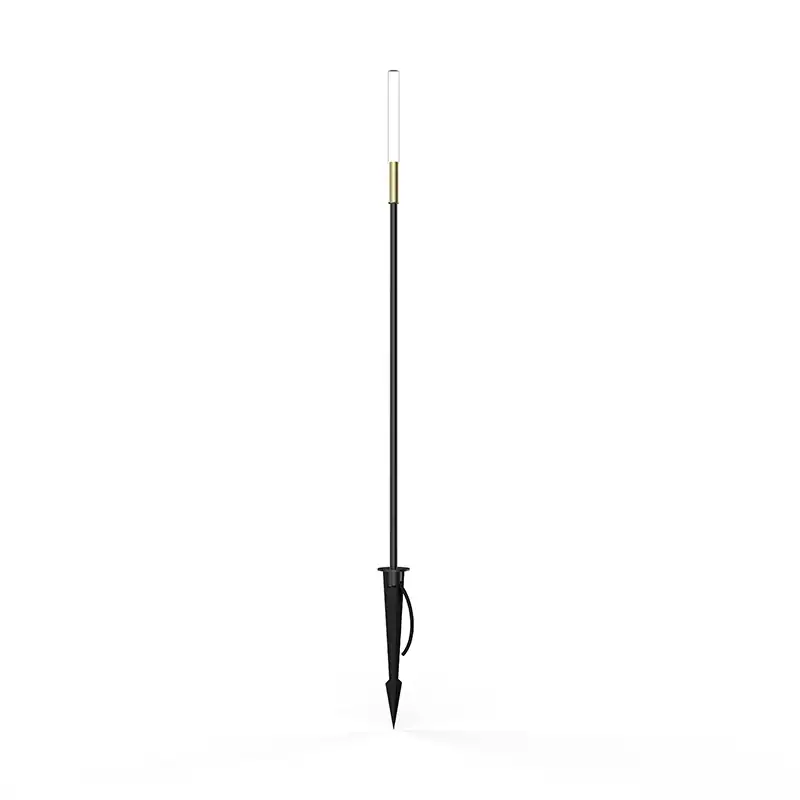


Modern Garden Lights
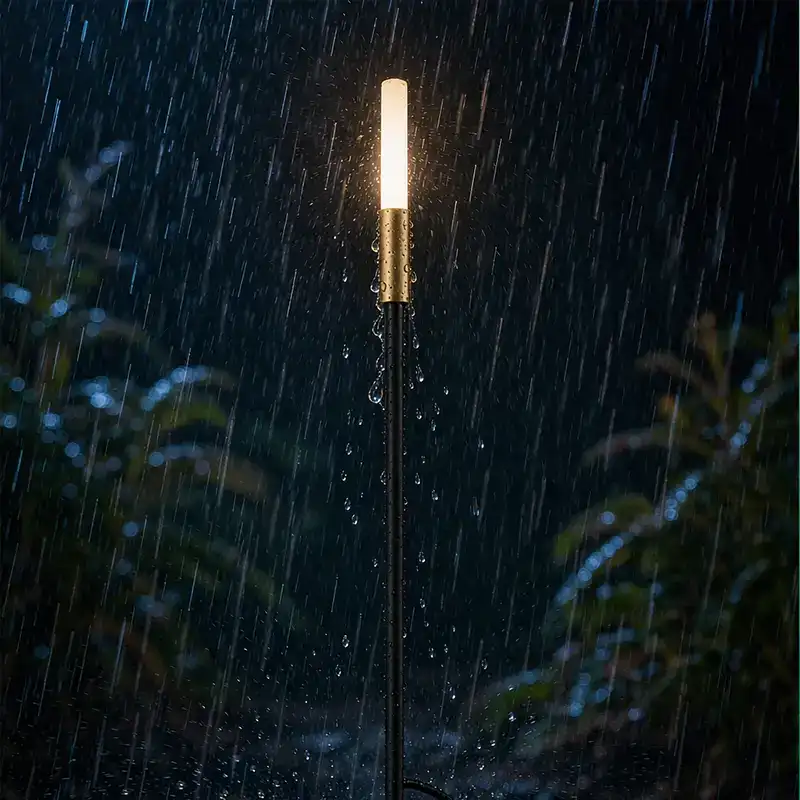
The head is a 120 mm cylinder of opal acrylic. Light from the LED escapes through the full wall of the cylinder, so the glowing part is the head itself — an even, warm line at 2700K, visible from all sides.
There is no lens, no cut-off, no hot spot. Walking past it, you see a soft vertical line of light, not a glare source. That single property changes how the fixture can be used: it can sit close to eye level on taller versions, next to a seat, or along a path edge, without shining into anyone's face.
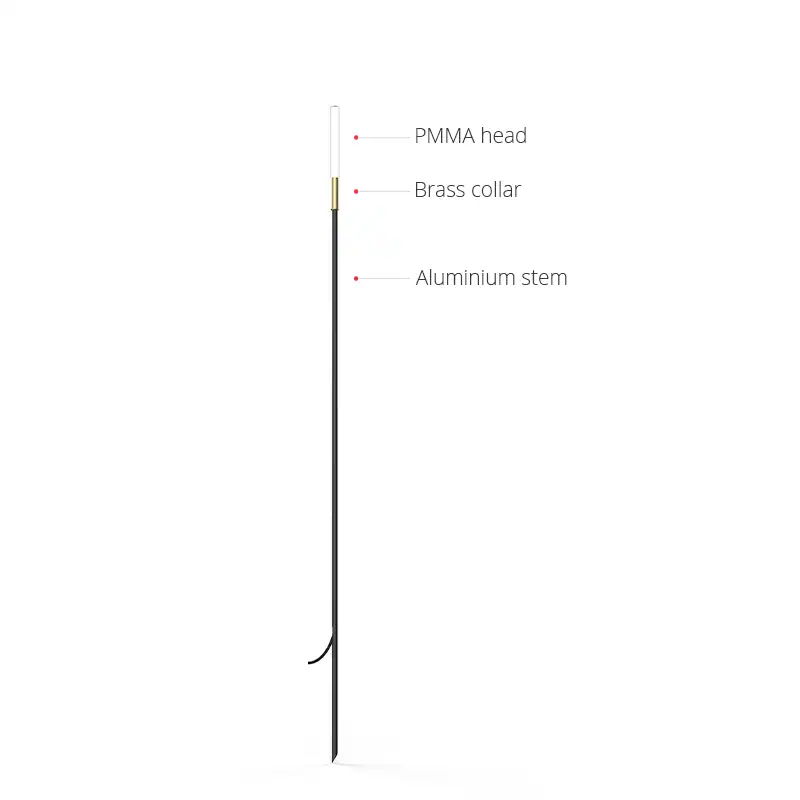
Three parts. Nothing decorative.
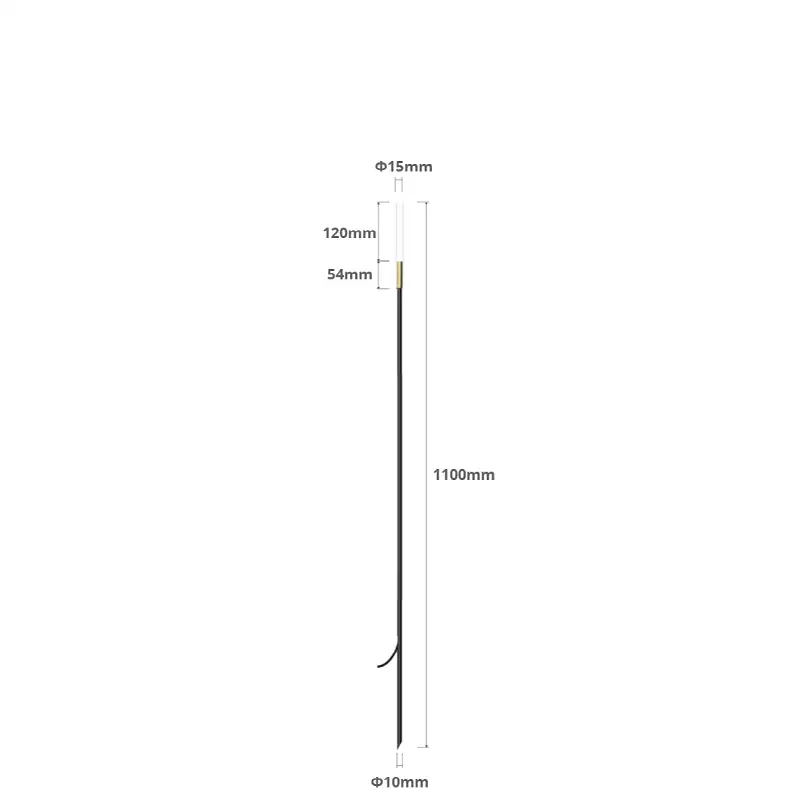
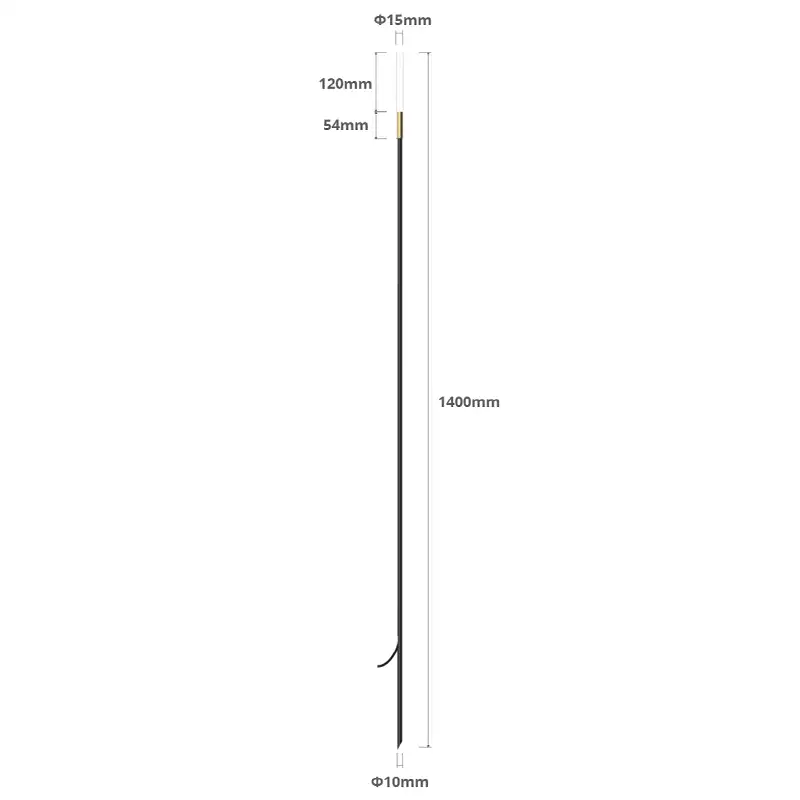
A 10 mm aluminium stem in RAL 7016. A machined brass holder, 54 mm tall. A 120 mm head of opal acrylic, Ø15 mm.
The proportions are the design: the stem is as thin as it can be while still carrying the head, so the fixture disappears into planting; the brass mark sits exactly where the eye finds it; the head is a clean cylinder with no lens ring, no bezel, no visible hardware.
All three parts can be specified independently — stem length, head dimensions and finish.
Four heights. Each does a different job.
Height is not a styling choice here — it decides what the fixture does on site.
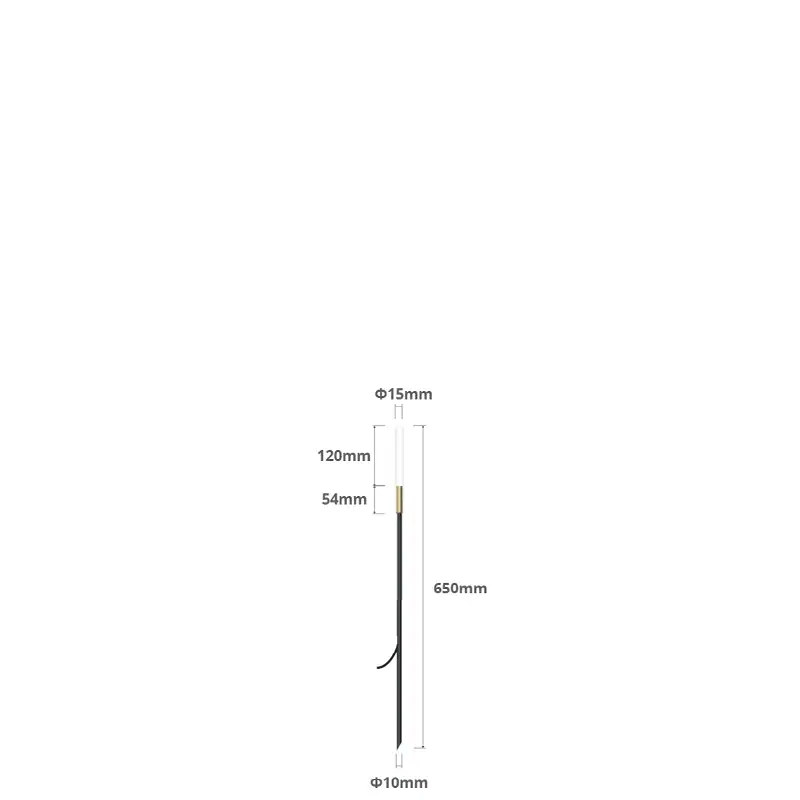
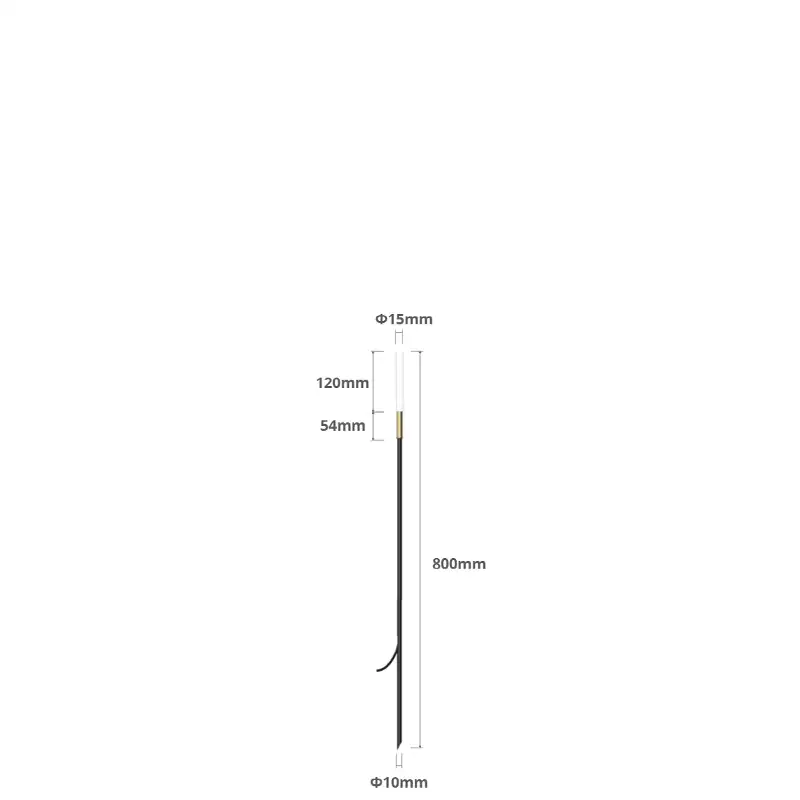
Installation: three ways into the ground
All three mounting methods are made for retrofit into existing, planted ground — no concrete base, no junction housing at grade. What separates them is where the cable joint ends up.
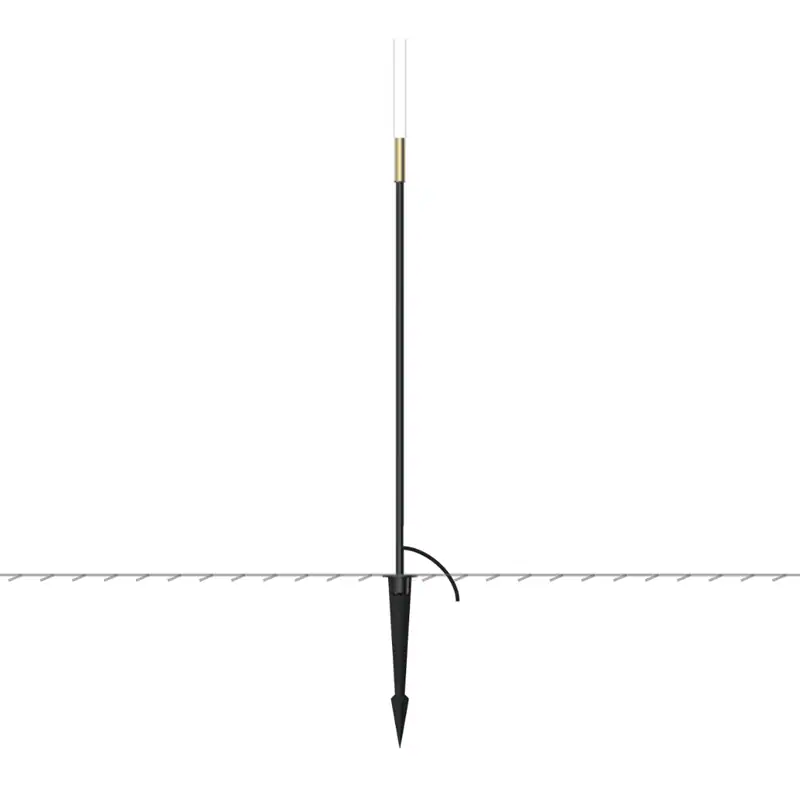
Spike install. A cast spike drives into the planting bed. Use it in soil and gravel where positions may still change.
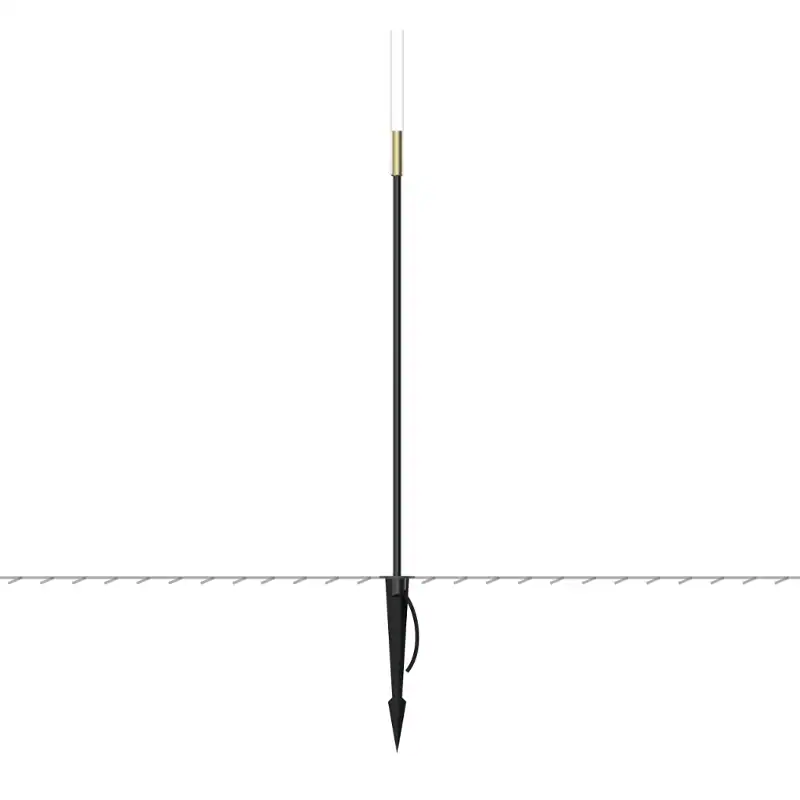
Spike with connector port. The same cast spike, with the cable joint built into the spike body instead of left loose in the soil. The port sits below grade but stays reachable, so a failed joint can be serviced without lifting the fixture or digging out the bed — the reason to specify it wherever maintenance access is difficult.
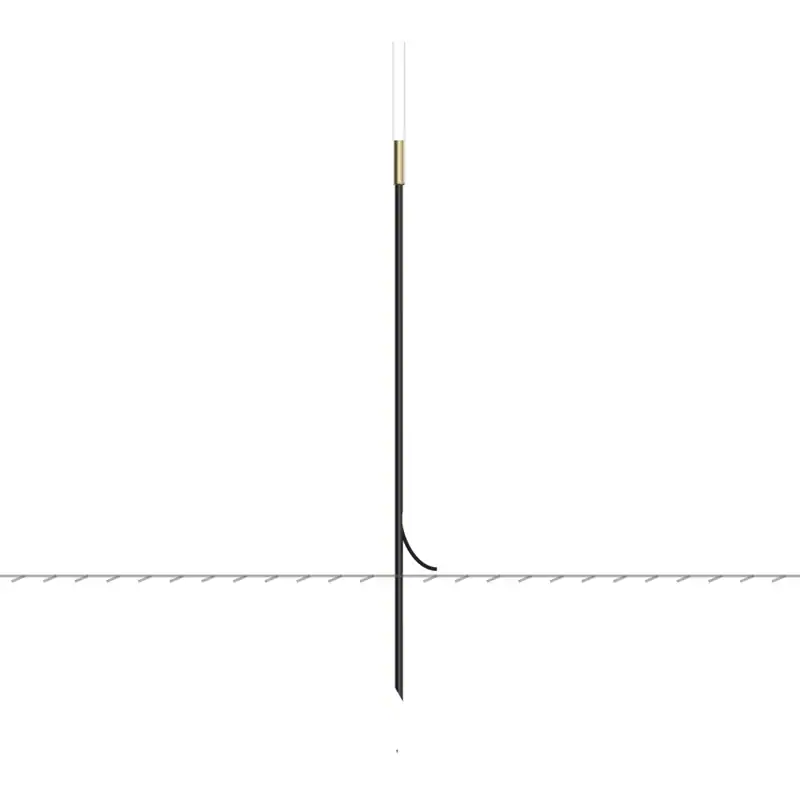
Direct insertion. The pointed base pushes flush into the lawn or bed. Cable loop exits just above grade, inside the planting, where it stays out of view.
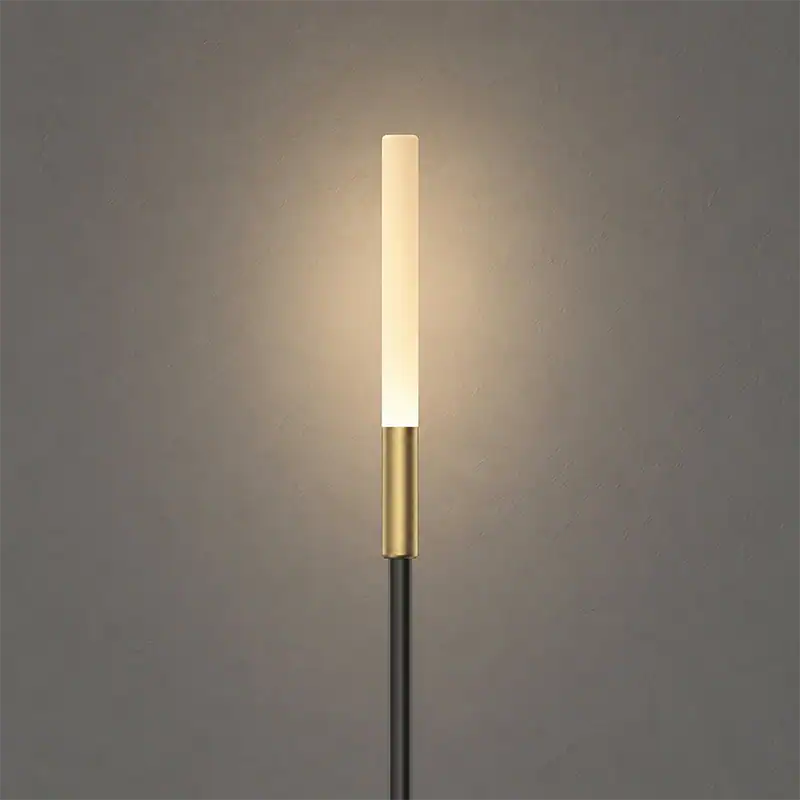
Diffused Light Emission Design
The luminaire adopts a diffused light emission method with a diffused beam angle. The light diffuses evenly along the outer wall of the light head without directional spotlight effect.
Integrated Structural Form
The stem and the light head adopt a split combined structure. The stem is a slender column, and the light head is directly connected to the top of the stem, presenting an overall vertical rod shape.
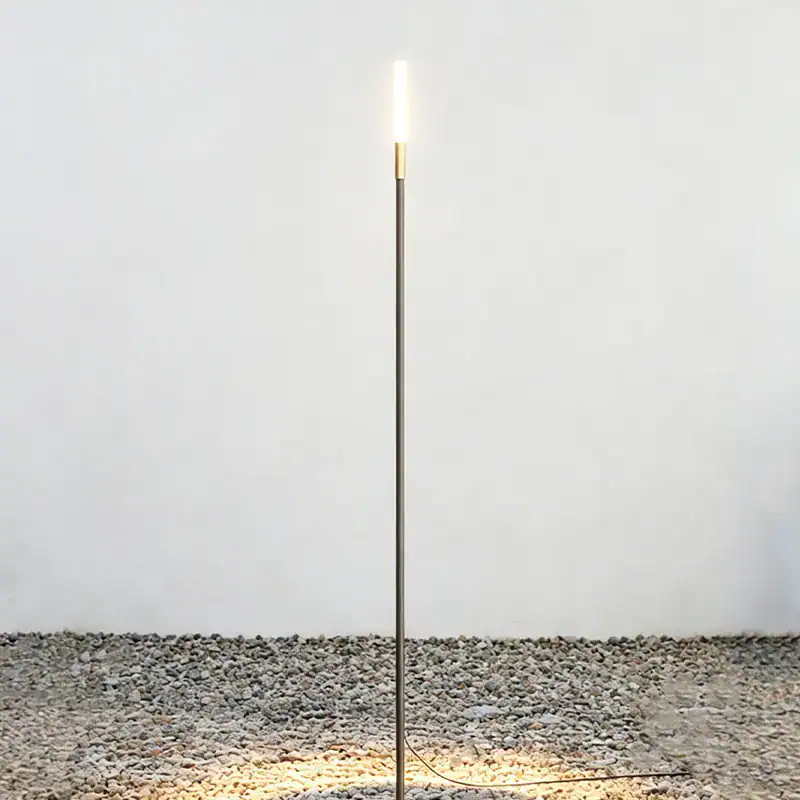
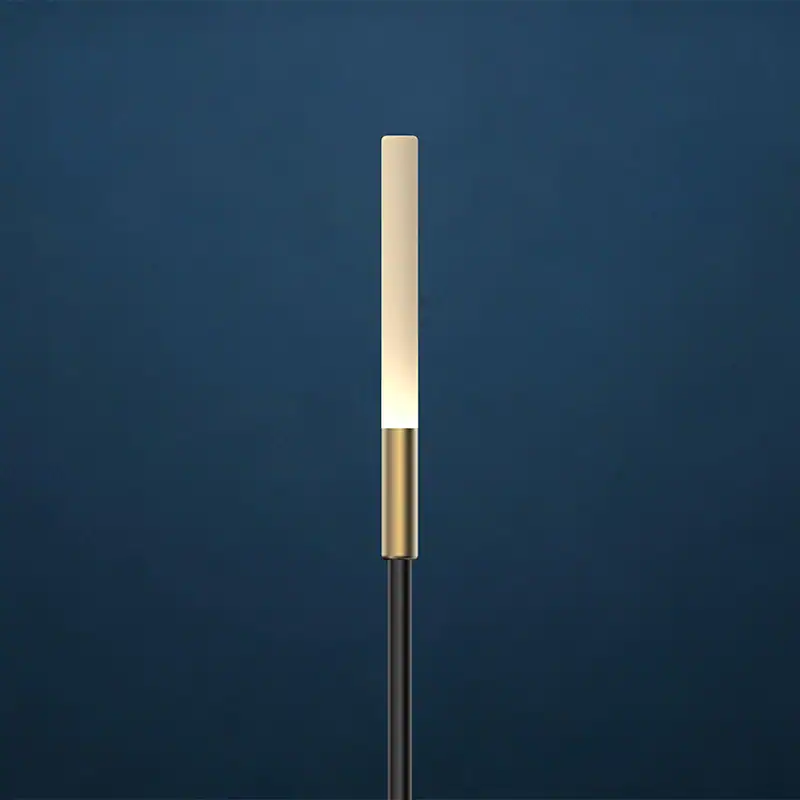
Aluminum Stem & Acrylic Light Head
The stem is made of aluminum, and the light head is made of acrylic. The surface of the stem is spray-treated with RAL7016 color code.
IP65 Protection Rating
The luminaire has an IP65 protection rating. The lamp body structure has dustproof and waterproof performance and can be directly installed in outdoor open-air environments.
Selectable Dimension and Wattages
All parts are customisable — stem length, head dimensions and finish. Please confirm project requirements before ordering.
Why Choose GS LIGHT
Behind the SW Series is a manufacturer that has spent {{Years: 2009}} years building outdoor lighting for projects in 150+ countries. We control the whole chain in-house — R&D, die-casting, CNC, assembly, and testing on a 30,000m² production base — so the 10mm stem, the solid acrylic rod and the IP65 rating on this fixture are specs we can hold, batch after batch, not numbers copied from a catalogue. OEM and ODM are available when your project needs a different height, finish or packaging.
+ Countries
≈ ㎡
Where it works
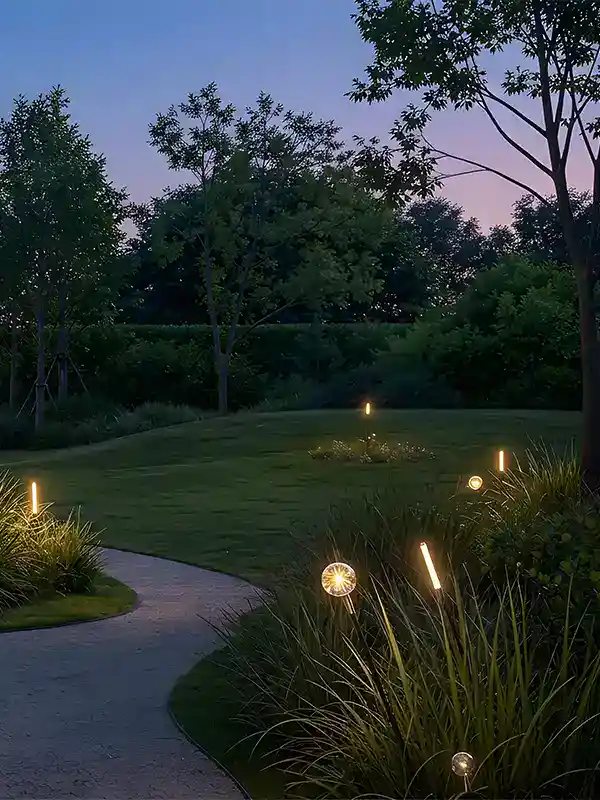
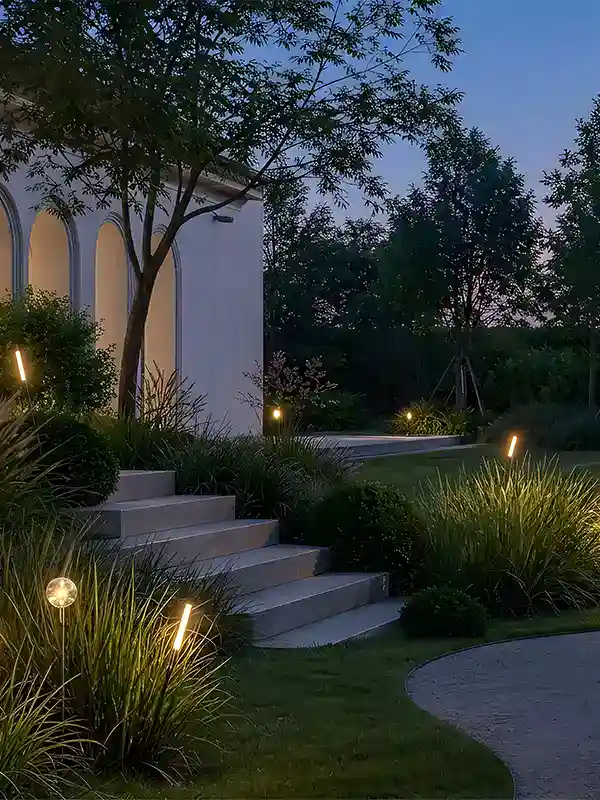
The SW Series is a marking light, not an area light. It works where the job is to define a line — a path edge, a planting bed, a border, a low boundary wall — rather than to illuminate a surface. Typical placements: villa and resort gardens, hotel walkways, courtyards, entrance planting, rooftop landscape. Its 0.8W output is for orientation and atmosphere; projects that need lawn or facade illumination need a different fixture.



FAQs
Find answers by topic, from product specifications and lighting design to OEM/ODM, quality, ordering and technical support.
The SW Series is not an area light. 0.8 W through a fully diffused head gives a marking glow — enough to read a path edge and a planting line at night, not enough to flood a lawn. If you need illumination, you need a different product; if you need orientation and atmosphere, 0.8 W is the correct order of magnitude.
Yes, and it is the intended use. All four share the same head, brass holder and stem diameter, so mixing 650 / 1100 / 1400 mm in one bed reads as one system in three registers.
Above eye level, the glowing cylinder is seen from below and from the side — against sky and foliage, not into the pupil. Because the light emits sideways from a diffused wall and not downward from a lens, there is no beam directed at anyone standing near it.
Height, CCT, and head size. The head is Ø15 × 120 mm as standard and customisable; stem finish is RAL 7016 as standard. Contact us with the project drawings and we will confirm feasibility and lead time.
As a starting point, designers typically space path-marking bollards of this output 2 to 3 metres apart on garden paths, and 3 to 4 metres in loose planting beds. The right spacing depends on the darkness of the site and how strong the marking line needs to be, so treat these as a starting layout, not a factory specification. Send us your plan and we will check the rhythm before you order.
Each fixture draws 0.8 W, so a mid-size 60 W driver can carry dozens of them on paper. The real limit is cable length, not wattage: on DC24V, long runs lose voltage along the cable and the fixtures at the far end glow slightly dimmer. The practical answer is multiple feed points rather than one long daisy-chain. Send the layout with the driver location and we will mark where feeds should be.

