Worried about your dark, unsafe walkways that turn customers away?
Our team has analyzed 100+ commercial properties to see which lighting setups have the biggest impact. Read this guide, and you’ll know exactly which lighting types improve safety and create a welcoming ambience.
By the end, you will know which options are just a waste of money.
Let’s get into it.
| Aspect | LED Lighting | Traditional Lighting |
|---|---|---|
| Energy Use | Much lower power consumption | High electricity bills |
| Lifespan | 50,000+ hours | 1,000-2,000 hours |
| Maintenance | Minimal replacement | Frequent bulb changes |
| Initial Cost | Higher upfront | Lower purchase price |
| Light Quality | Consistent, no flicker | Dims over time |
Think about long-term costs when choosing between LED and traditional options. Although LEDs cost more upfront, they last 25-50x longer than traditional lighting. And you won’t have to call maintenance every few months to replace your burnt-out bulbs.
Pick the wrong lighting, and your property looks dull (or worse, unsafe). Each type below solves specific problems, so select the one that best fits your business needs.
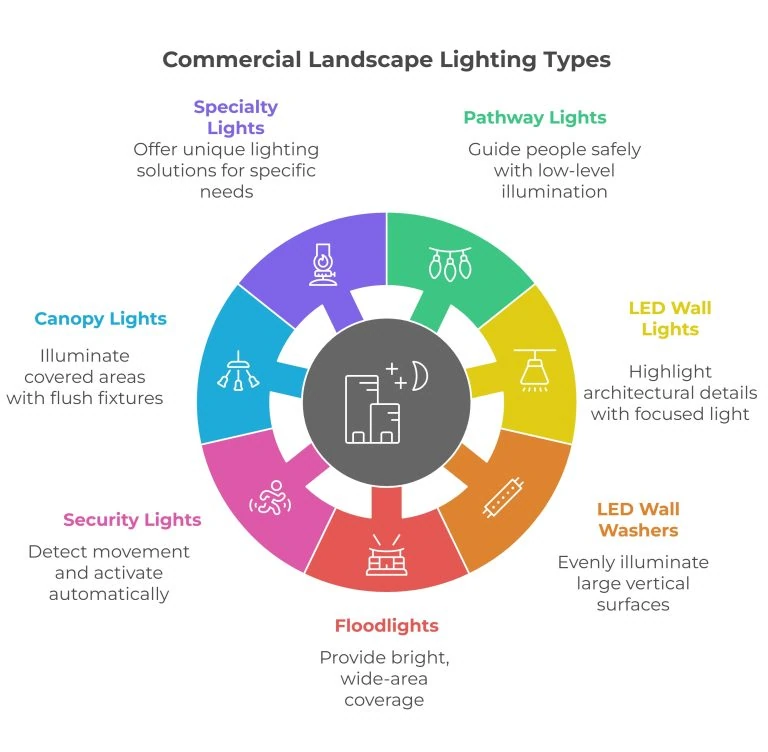
Pathway and step lights guide people safely from parking lots to entrances. They sit low to the ground and cast light downward, which prevents trips and falls while adding a polished look to walkways.
Pro Tip: Space pathway lights 6-8 feet apart for even coverage. If you’re lighting stairs, install fixtures on every third step, minimum. For a flush, modern look that won’t get damaged, explore our selection of outdoor spotlights and install them at the ground level.
LED wall lights mount directly to building exteriors and create focused pools of light. They work best when you want to draw attention to architectural details like columns, textured walls, or company signage.
Pro Tip: Position wall lights at a 30-degree angle to avoid harsh shadows. If you’re lighting textured surfaces, place your fixtures closer (about 3-4 feet apart) to show off the detail. Be sure to use high-quality lighting solutions built for commercial wall mounting applications, like these LED bulkhead lights.
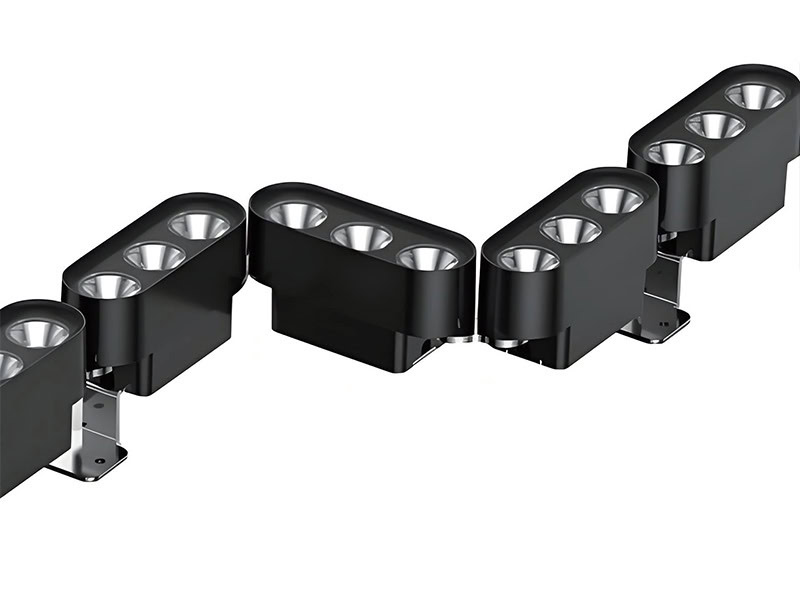
Wall washer lights sit at ground level and project light upward, which evenly illuminates large vertical surfaces. They’re called “washers” because the light spreads wide and washes over walls without creating spots or streaks.
Pro Tip: Install wall washers 2-3 feet from the base of your building for optimal coverage. If your wall exceeds 20 feet tall, you’ll need higher-wattage fixtures to reach the top.
These IP66-rated wall washer lights are ideal for heavy commercial use and can withstand harsh outdoor conditions.
Floodlights blast wide beams of bright light across large outdoor spaces. Unlike focused spotlights, floods cover entire areas at once, which makes them ideal for parking lots, loading docks, and sports facilities.
Pro Tip: Parking lots need proper lighting for safety and security. Consider installing landscape flood lights or solar flood lights in areas without easy electrical access. These lighting systems deliver up to 150-200 lm/W efficiency with IP65-IP66 waterproof protection.
Security lights activate automatically when they detect movement. They mount on walls, under eaves, or near entry points. These lights protect your property and reduce energy costs by staying off when nobody’s around.
Pro Tip: Position motion sensors 6-8 feet high and angle them toward high-traffic zones. Set the detection range to 20-30 feet to avoid false triggers from passing cars. Options like LED bulkhead lights with motion detection offer microwave radar sensing that can penetrate non-metal materials like glass and wood.
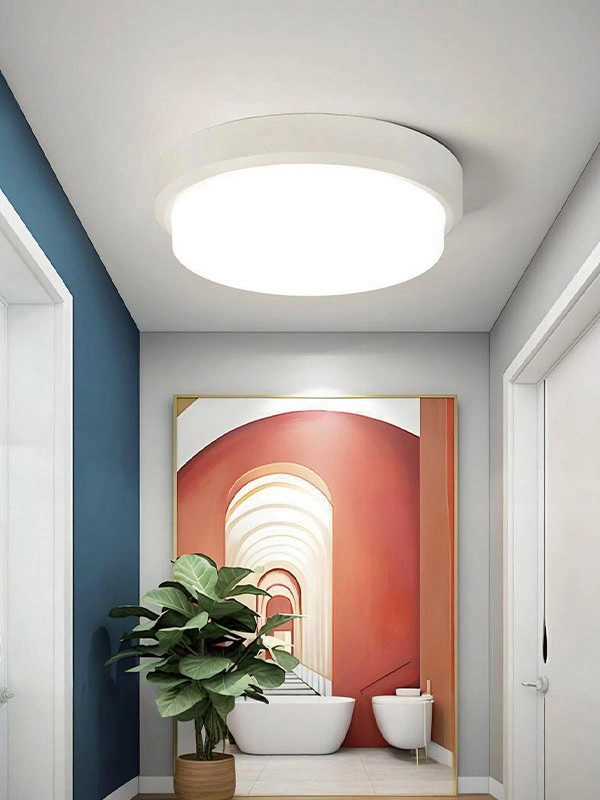
Canopy lights mount flush to covered ceilings like gas station overhangs, building entries, or outdoor walkway coverings. They provide overhead illumination without dangling fixtures that can be damaged or look cluttered.
Pro Tip: Canopy lights need high IP ratings (IP65 or higher) because they’re exposed to rain and snow. Look for fixtures with adequate lumen output for your coverage area.
We recommend using these LED tri-proof lights to ensure you’ll get weather-resistant lighting in your outdoor or semi-outdoor areas.
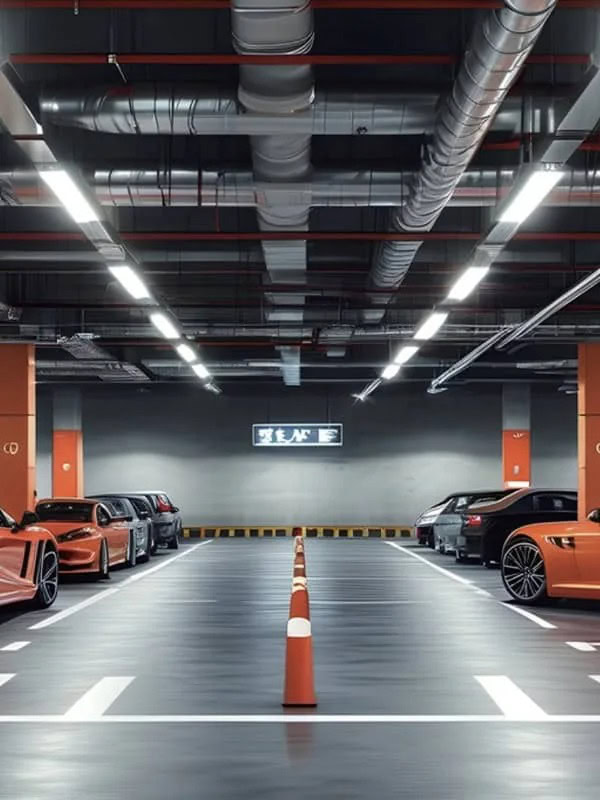
Specialty lights include everything that doesn’t fit the categories above: bollard lights for landscape borders, solar lights for remote areas, color-changing LEDs for events, and custom fixtures designed for unique architectural needs.
Pro Tip: Specialty fixtures cost more than standard options, so use them wisely. Limit them to high-visibility areas like main entrances or signature architectural features. For versatile options, consider outdoor wall lights in various styles.
Buying lights without a plan wastes money. Follow these strategies to get fixtures that match your property’s needs:

Walk your property at night and identify the dark zones. Ask yourself:
Take photos from different angles, including from the street view, where first impressions form. Measure distances between key points, such as parking lots, walkways, building entrances, and loading docks.
This data tells you exactly how many fixtures you’ll need and helps you calculate proper spacing for uniform coverage. Create a simple sketch or use satellite imagery to mark:
With this approach, you ensure you pick lights with the right brightness, style, and placement to maximize safety and visual appeal without overspending.
Color temperature directly influences your customer behavior. Use this table to match your lighting color temperature with the mood you want to create for your space:
| Color Temperature | Kelvin Range | Atmosphere/Effect | Best For |
| Warm White | 2700K-3000K | Inviting, relaxed, cozy | Restaurants, cafes, hotels, resorts, and retail storefronts with evening hours |
| Neutral White | 3500K-4000K | Balance comfort with performance | Healthcare facilities, gas stations, and convenience stores |
| Cool White | 4000K-5000K | Crisp, alert, modern visibility | Offices, retail stores, parking structures, and hardware stores |
White light (warm, neutral, cool) is usually for general visibility and task lighting, while colored lights are more for accent, ambiance, or signaling mood.
Tip: Use the same (one) light color in connected areas. Mixing warm (3000K) and cool (5000K) lights in the same space can look messy and confuse people. If you need different colors, create clear visual boundaries between zones.
This testing phase acts as quality control to invest in lights that actually work for your commercial space. To do this, set up temporary lights or use mobile fixtures to preview your layout. This saves you from expensive reinstallation if the placement doesn’t work.
You can also stand where your customers stand and check if the light hits where you need it. Look for glare, shadows, or spots that are too bright. Testing before permanent installation prevents costly corrections later.
Smart controls let you dim, schedule, and monitor lights from your phone. You can set parking lot lights to full brightness until midnight, then reduce them after hours. Motion sensors paired with smart controls help cut energy use.
Program different scenes for holidays, special events, or seasonal changes without climbing ladders. Cloud-based systems also alert you when bulbs need to be replaced. Many of our outdoor LED lights support DALI dimming, 0-10V dimming, and intelligent sensor integration.
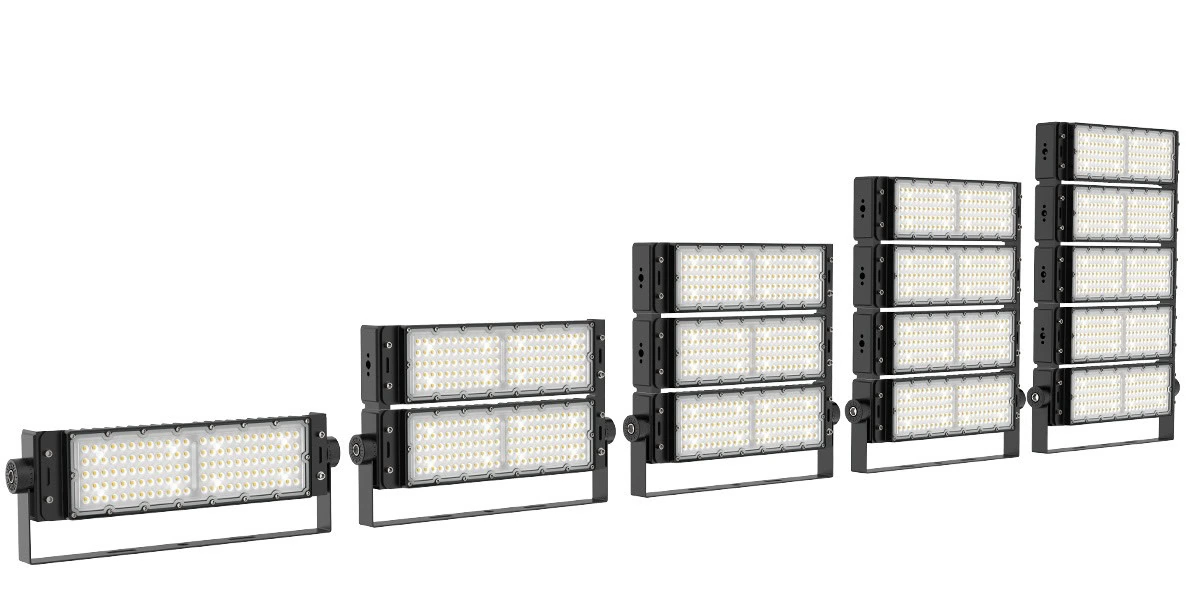
LED fixtures vary in cost depending on wattage and features. Professional installation adds to the upfront expense, but the long-term energy savings make LEDs a good investment for most commercial properties.
Here’s the thing: LEDs use far less electricity than traditional bulbs. Your LED system pays for itself within a few years through reduced energy bills, then continues saving you money for years to come.
Good lighting increases visibility, improves safety, and makes your property more attractive to customers. When your property looks safe and inviting after dark, customers feel more comfortable visiting. Proper lighting also reduces liability risks from accidents and can lower insurance costs.
Die-cast and extruded aluminum are the top choices for commercial outdoor lighting, particularly for outdoor flood lights. Die-cast aluminum provides excellent heat dissipation for high-wattage fixtures. Extruded aluminum costs less and works well for simpler designs.
LEDs are better for reliability and consistent brightness. They deliver steady light output regardless of weather and work in shaded areas where solar panels struggle. Use solar LED lights for remote locations where running electrical lines is costly or challenging.
You now know the types of commercial landscape lighting, and now it’s time to act.
Identify dark spots in your areas and consider what lighting solutions can fix them. Match the right type of light to your needs. Need safer walkways? Choose pathway lights. Trying to illuminate large areas? Floodlights are the answer.
If you’re upgrading from traditional bulbs, LEDs are the way to go. They save energy and last much longer. And don’t rush permanent installation, test placement first. A few adjustments now can prevent expensive fixes later.
Need expert guidance? Our team at GS Light LED handles commercial landscape lighting installations that cut energy costs by 75-90%. Contact us today to assess your property, recommend the best lighting for your needs, and manage the full installation.