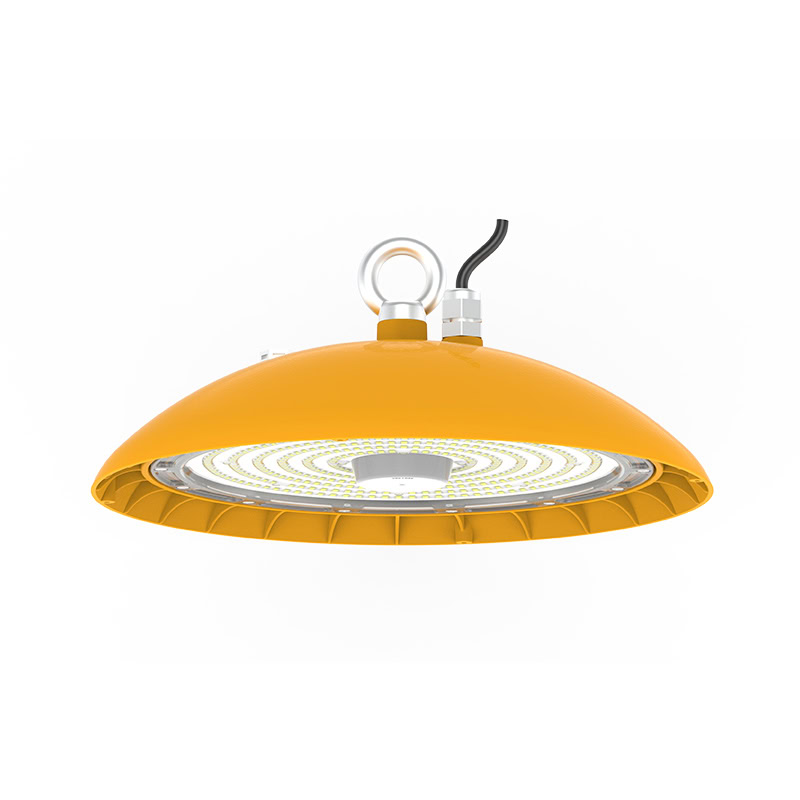
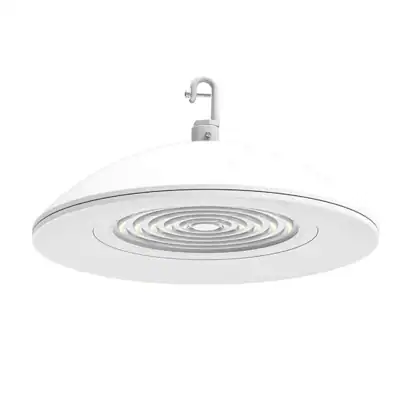
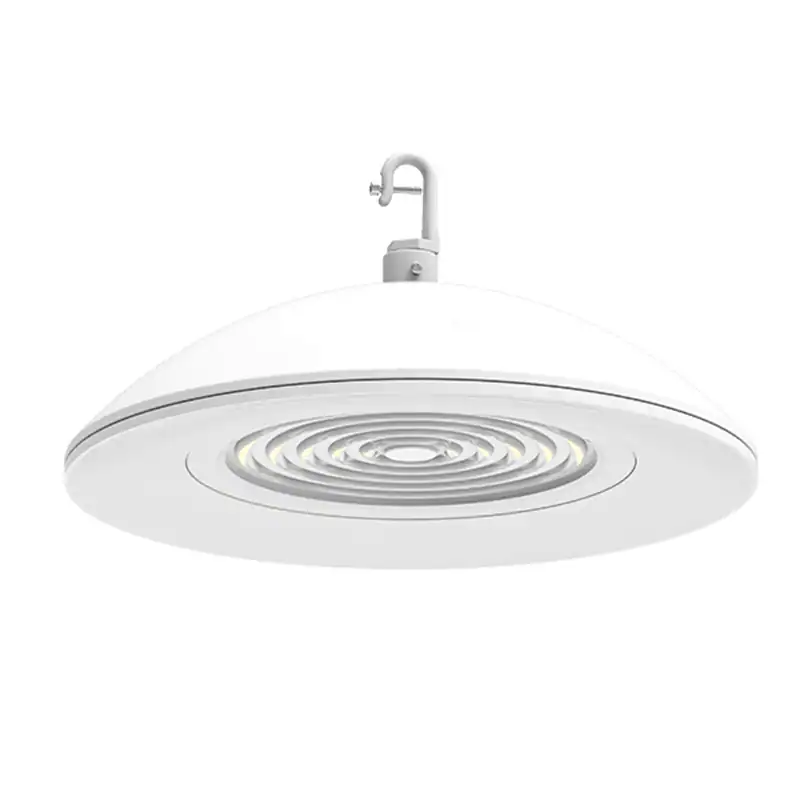
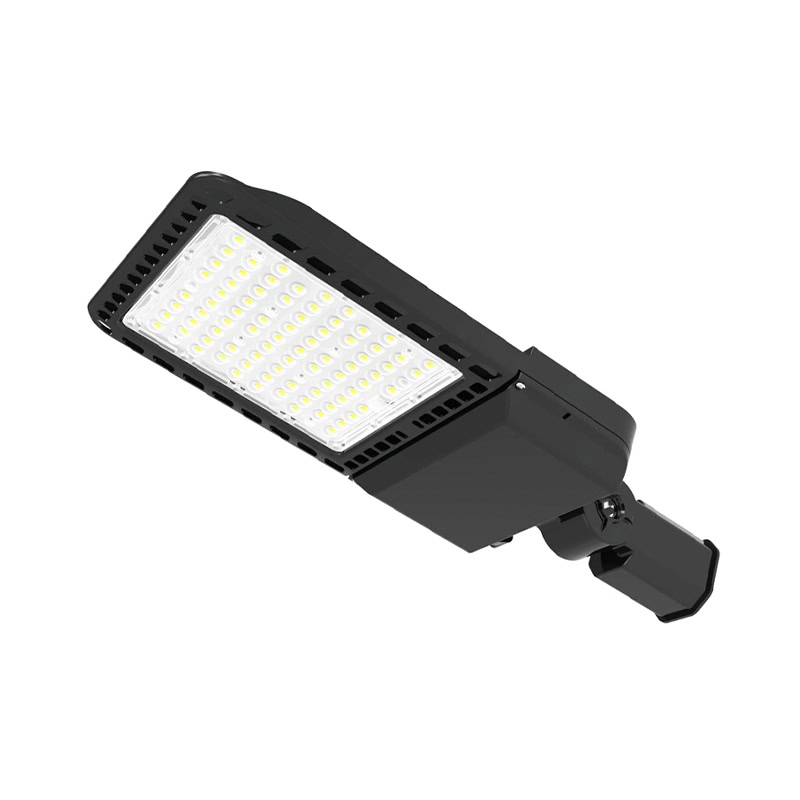
LED High Bay Light, U6 to U15 Series

High Temperature High Bay LED Lighting, U11 Series

LED Tri Proof Light, TM and TD Series
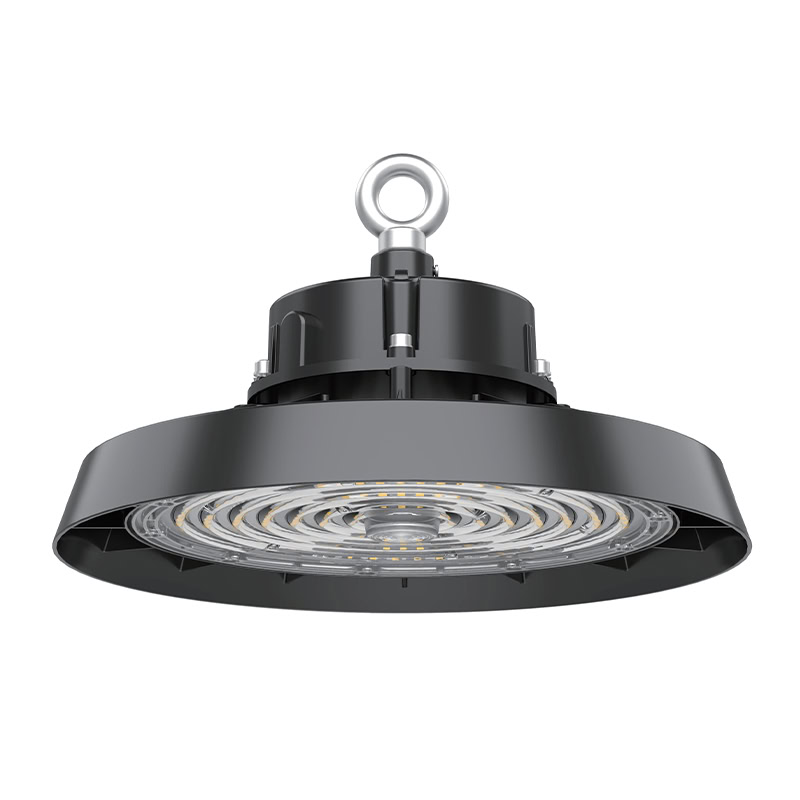
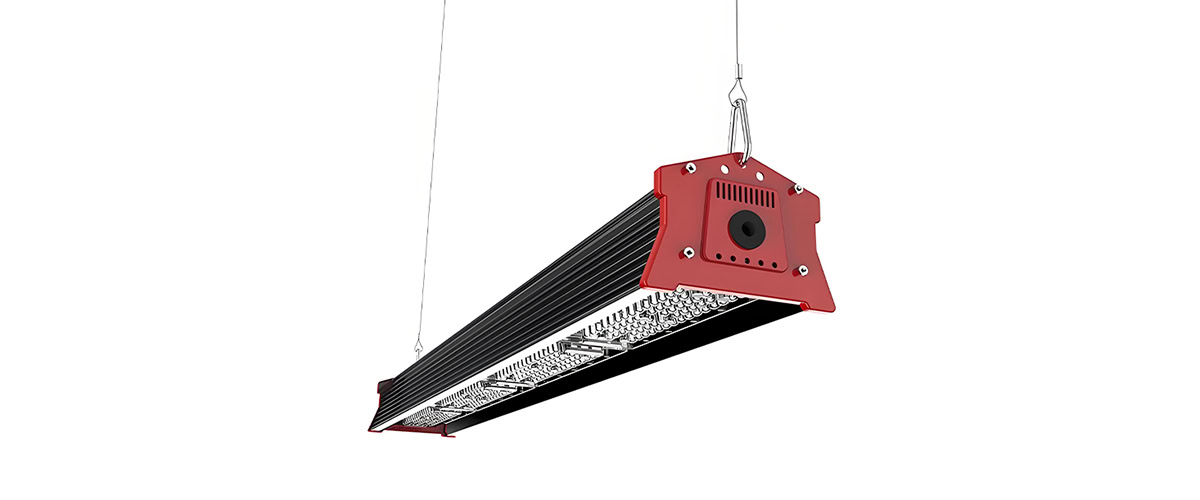
Linear High Bay Light, L2 to L4 series
Assembly and inspection work fails quietly under poor light. Typical starting levels are 300 to 500 lux over general production, 500 to 750 lux at assembly benches and 750 lux or more where work is fine or inspected, confirmed against the local standard and the process. A plant lit to one average level has some benches under specified and the rest over lit.
A luminaire rated at 50,000 hours in a laboratory fails early above its rated ambient temperature. Forging, casting, glass and boiler areas run at 60°C to 90°C, which is why GS LIGHT builds the U11 series for those bays and tests it there rather than assuming.
Changing a fitting over a live line means shutting the line or working at height around it. Fixtures with IP65 or better, surge protection to 20kV and a 5 year warranty are specified to stay up, not to be cheap.
Plants that run two or three shifts burn lighting energy continuously. As a worked example, replacing 100 fittings at 400W with 150W LED high bays cuts 25 kW of load. At 16 hours a day and 300 days a year, that is 120,000 kWh a year, before sensors and daylight control take more off idle bays. Tariff, hours and controls decide the final figure.


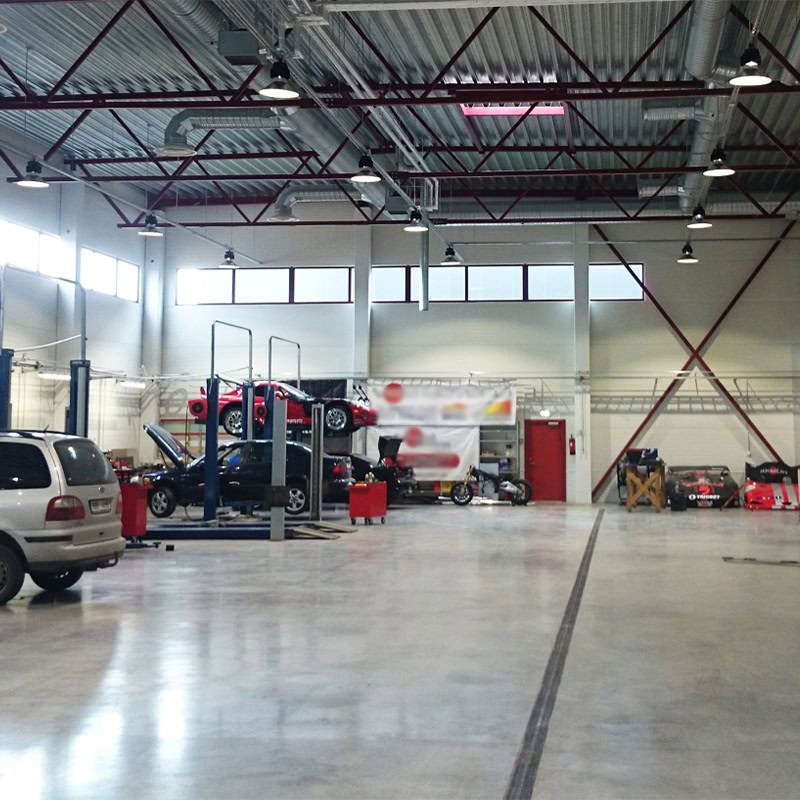
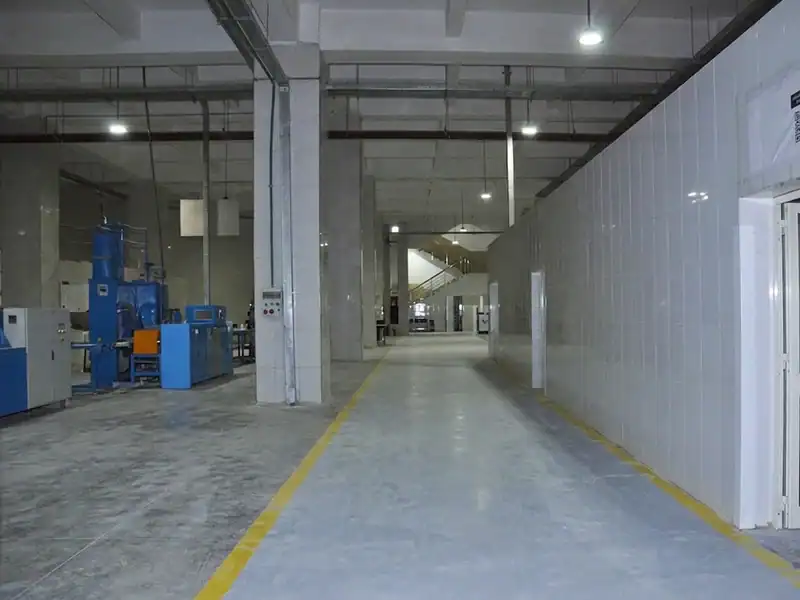
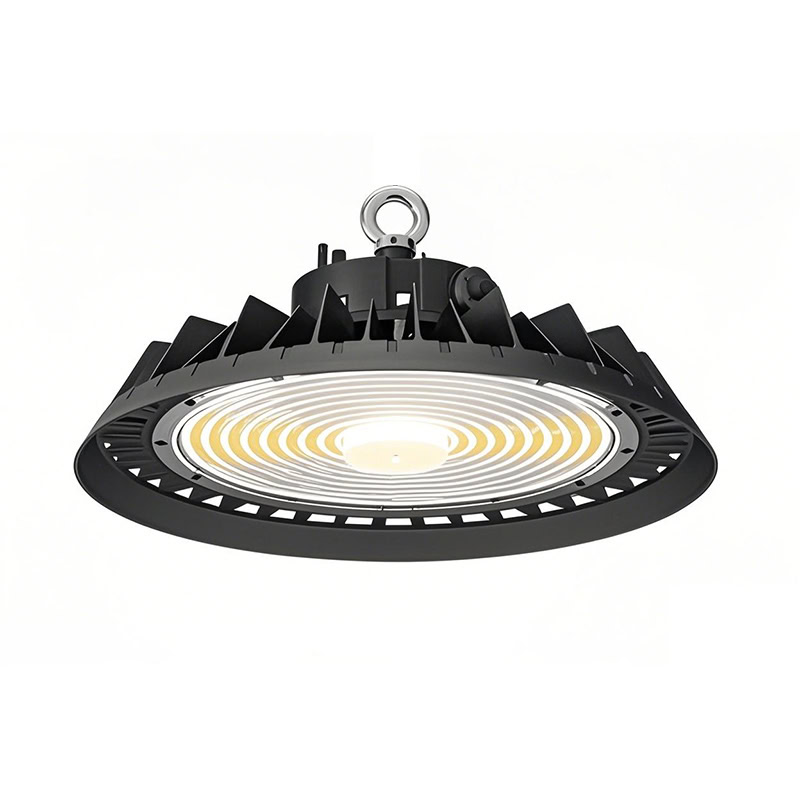


Optical performance: 60°, 90° and 120° optics on round fixtures, with asymmetric and narrow distributions on linear models. Efficacy from 140 to 200 lm/W across the high bay range.
Light quality: CRI 80 or higher as standard, and CRI 90 or higher for inspection and color judgment work. Low glare optics where operators look up, with UGR below 19 achievable in suitable layouts; glare depends on mounting height, layout and viewing direction as much as on the fixture.
Environmental rating: IP65 as the plant standard, IP66 on the high temperature series, IP69K for high pressure washdown. IK08 and IK10 impact ratings where forklifts and tools reach the fixture. Ambient ratings to 90°C on the U11 series.
Control and resilience: 0 to 10V and DALI dimming, microwave sensors, daylight harvesting, emergency battery packs of 30, 60 or 90 minutes, and 20kV surge protection on the high temperature line. Ask for power factor, THD, flicker and inrush current figures for the exact driver, since EPC and consultant approvals check them.
Compliance: ISO 9001 and ISO 14001 quality systems, with CE, CB Scheme, RoHS and SAA approvals per series. The documents sit on our certifications page. Areas classified for explosive atmospheres need ATEX or IECEx certified equipment, which the fixtures on this page are not, so confirm the zone classification before product selection.
| Area | Illuminance target | CCT and CRI | Rating and control |
|---|---|---|---|
|
General production floor |
300 lux |
4000K to 5000K, CRI 80+ |
IP65, sensor and dimming |
|
Medium assembly |
500 lux |
4000K to 5000K, CRI 80+ |
IP65, dimming |
|
Inspection and precision work |
750 to 1,000 lux |
4000K to 5700K, CRI 90+ |
IP20 to IP65, task level |
|
High temperature bays |
300 to 500 lux |
4000K to 5700K, CRI 80+ |
IP66, IK10, ambient to 90°C |
|
Material storage |
150 to 300 lux |
4000K, CRI 80+ |
IP65, sensor |
|
Washdown and food areas |
300 to 500 lux |
4000K, CRI 80+ |
IP65 to IP69K, NSF where required |
|
Workshops and maintenance |
500 lux, 750 at benches |
4000K, CRI 80+ |
IP65, emergency option |
|
Circulation and stairs |
100 to 150 lux |
4000K, CRI 80+ |
IP65, emergency battery |
|
Loading docks |
50 to 150 lux |
4000K, CRI 80+ |
IP65, sensor |
|
Yard and internal roads |
20 to 50 lux |
4000K, CRI 80+ |
IP66, timer or photocell |
Six principles. Principle one carries the standard and is written to be quotable.
We review floor plans, ceiling heights, structure, ambient temperature, cleaning regime and shift pattern zone by zone.
We set target levels per zone against EN 12464-1 and any local requirement, then agree the control approach.
We match series, wattages, optics, IP and IK ratings and accessories to each zone, including high temperature and washdown areas.
We produce calculations for the main bays and recommend sample units on site where conditions are hard, as the Saudi steel plant client did before ordering.
We supply mounting, aiming and control documentation, and stay available through commissioning and handover.
Three plants in three countries, with the fixture types, quantities and dates named.

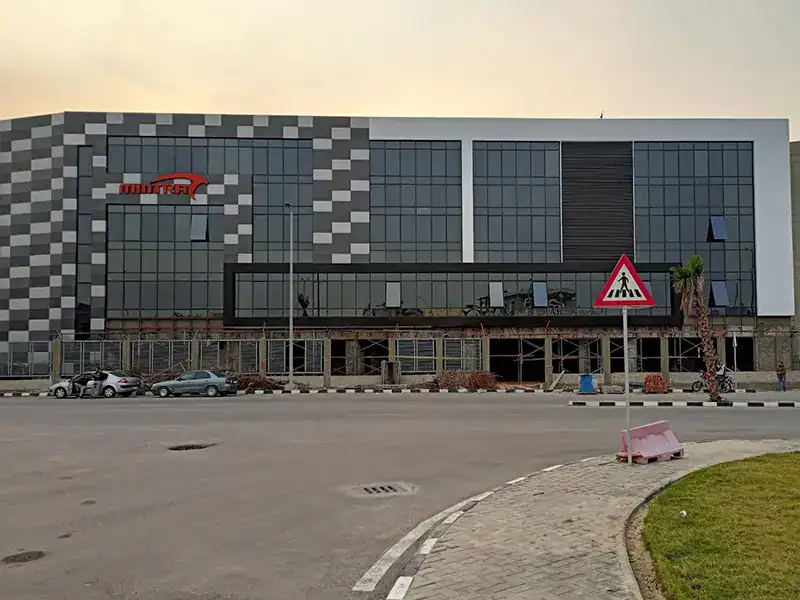
Mintra Garment Factory, Nasr City, Cairo, 2019

Typical starting levels are 300 lux for general manufacturing, 500 lux for medium assembly and 750 lux or more for inspection and precision work, based on EN 12464-1. Storage sits at 150 to 300 lux and circulation at 100 to 150 lux. Confirm final levels against the local standard and the process, and zone the plan by task rather than lighting the whole hall to one level.
The U11 high temperature series runs in ambient temperatures up to 90°C at 180 lm/W, with IP66, IK10 and 20kV surge protection. Standard high bays carry lower ambient ratings, so check the Ta rating for the selected model and measure the air temperature at fixture height during full production. Forging, casting, glass and boiler bays need the high temperature version.
A warehouse needs an even level over racking; a factory needs different levels over different processes in the same building. Factory schemes mix general high bays, task light at benches, sealed fittings in washdown areas and high temperature fixtures over hot processes, all controlled by shift pattern.
Use linear fixtures along a line and UFO fixtures over open floor. Linear models spread light along their length, which suits conveyors, benches and aisles, and they make relighting easier when the line moves. UFO models cover more floor per fixture in open bays.
Yes, with the right rating. IP65 resists dust and water jets, and IP69K withstands high pressure, high temperature washing. IP69K alone does not make a fixture food grade: food and pharmaceutical plants may also need specific construction materials, hygienic design or NSF certification over exposed product. Confirm the requirement for the project and ask for the certificate for the exact model.
Often, yes, once the existing installation is checked. Mounting points and circuits can usually be reused after the old ballast is removed or bypassed, but check suspension capacity, cable condition, earthing, input voltage, breaker capacity and circuit load first. On large installations, review driver inrush current and circuit grouping too, since startup current decides how many high bays can share a breaker. Send the existing fixture schedule and we will match wattages and optics so light levels rise rather than simply change.
0 to 10V and DALI dimming, microwave sensors, daylight harvesting, and emergency battery packs of 30, 60 or 90 minutes. Sensors suit storage and circulation; keep production lines on a fixed level so nothing dims mid task. Specify emergency versions at order stage rather than retrofitting them later.
GS LIGHT holds CE certificates by product line, TUV CB test reports and ISO 9001:2015 and ISO 14001:2015 factory certification, with a 5 year warranty on the high bay range. Test reports for individual models come with the quotation. For projects that need DLC, UL or ETL listing, ask before ordering so we can confirm coverage.
If you are unsure how to design your factory lighting, send us your drawings, ceiling heights and production requirements. We can help with fixture selection, lighting calculations and the fixture layout.